
Key Summary
Prophet Muḥammad ﷺ died in Madīnah on Monday, 12 Rabīʿ al-Awwal 11 AH / 8 June 632 CE, after a progressive febrile illness lasting approximately thirteen days. He passed away in the room of ʿĀʾishah, may Allah be pleased with her, at approximately sixty-three years of age. Islamic sources record a separate poisoning incident at Khaybar in 7 AH, during which he tasted poisoned meat, was supernaturally informed of the danger, halted ingestion, and warned those present — while one companion, Bishr ibn al-Barāʾ ibn Maʿrūr, died from the same meal within days. Classical historical accounts treat his final illness as a distinct episode from the Khaybar incident, describing it as a severe fever and physical decline rather than an acute toxic event. This article examines the primary sources, addresses the medical evidence, and responds to five polemical arguments that attempt to connect these two separate episodes into a single proof against his prophethood.
Preamble: Death of Muhammad
Few figures in religious history have left as significant a legacy as the Prophet Muhammad ﷺ, whose teachings profoundly shaped Islamic civilisation. Nevertheless, persistent misconceptions, often stemming from misinterpretations of Quranic verses and hadiths, seek to challenge his integrity. Critics have attempted to construct an argument from three elements: a Qurʾānic warning in Sūrat al-Ḥāqqah (Q. 69:44 – 46) that threatens divine punishment for fabricating revelation; a ḥadīth report in which the Prophet ﷺ describes pain during his final illness using a vivid anatomical expression; and the historical record of a poisoning attempt at Khaybar several years before his death. The argument depends on treating these three elements as a single connected proof.
The circumstances surrounding the passing of the Prophet ﷺ have sparked debate, with critics frequently pointing to the alleged death of Muhammad by poisoning as evidence against his prophethood. This article seeks to scrutinize these assertions by meticulously analyzing historical and medical evidence. A rigorous examination of primary Islamic sources and contemporary medical insights aims to elucidate the truth behind such claims, providing clarity and reaffirming the Prophet’s unblemished integrity and prophetic authenticity.
What Does Qurʾān 69:44 – 46 Actually Say? The Aorta Verse Explained
A. Contextual Interpretation
The verses in question from Surah al-Haqqah state:
وَلَوْ تَقَوَّلَ عَلَيْنَا بَعْضَ الْأَقَاوِيلِ ﴿٤٤﴾ لَأَخَذْنَا مِنْهُ بِالْيَمِينِ ﴿٤٥﴾ ثُمَّ لَقَطَعْنَا مِنْهُ الْوَتِينَ ﴿٤٦
Wa law taqawwala ‘alaynā ba‘ḍa al-aqāwīli (44)
La’akhaẓnā min’hu bi-al-yamīn (45)
Thumma laqaṭa‘nā min’hu al-watīn (46)Translation:
“And if Muhammad had made up about Us some[false] sayings, We would have seized him by the right hand; Then We would have cut from him the aorta.”1
Critics often misrepresent these verses to suggest that Muhammad (ﷺ) made up divine revelations. However, a closer look shows the hypothetical nature of the clause, making it clear that this scenario did not and could not have occurred. The rhetorical construct serves to emphasize the absolute truthfulness and divine protection given to the Prophet (ﷺ). This severe hypothetical consequence is a testament to the sanctity and integrity of the divine message he conveyed.
Moreover, the Qur’an itself states that the Prophet had completed his mission:
الْيَوْمَ أَكْمَلْتُ لَكُمْ دِينَكُمْ وَأَتْمَمْتُ عَلَيْكُمْ نِعْمَتِي وَرَضِيتُ لَكُمُ الْإِسْلَامَ دِينًا
Al-yawma akmaltu lakum dīnakum wa atmāmtu ‘alaykum ni‘matī wa raḍītu lakumu-l-Islāma dīnaTranslation:
“This day I have perfected for you your religion and completed My favor upon you and have approved for you Islām as religion.”2
Given this declaration of the completion of the religion of Islam, the logic of claiming that he died due to the threat in Surah al-Haqqah (Q 69:44 – 46) is flawed. The completion of his mission contradicts any assertion that his death was a result of divine retribution for falsehood.
Hadith Analysis: The Prophet’s Suffering
The suffering of the Prophet (ﷺ) due to the poisoned meat he consumed at Khaybar is well-documented in Islamic sources. Critics often misinterpret these accounts to suggest a connection with the Quranic warning in Surah al-Haqqah, but a closer examination reveals a different narrative. The hadith reports highlight the Prophet’s immense resilience and the metaphorical language used to describe his suffering, rather than implying any divine retribution.
A. Sahih al-Bukhari and Sunan Abi Dawud
The hadith from Sahih al-Bukhari reports:3
يَا عَائِشَةُ مَا أَزَالُ أَجِدُ أَلَمَ الطَّعَامِ الَّذِي أَكَلْتُ بِخَيْبَرَ، فَهَذَا أَوَانُ وَجَدْتُ انْقِطَاعَ أَبْهَرِي مِنْ ذَلِكَ السَّمِّ
Yā ‘Ā’ishah ! Mā azālu ajidu ʾalam aṭ-ṭa‘ām allaḏī akaltu bi-Khaybar, fa-hādhā awānu wajadtu inqiṭā‘a abharī min dha-l-samm.“O ‘Aisha! I still feel the pain caused by the food I ate at Khaibar, and at this time, I feel as if my aorta is being cut from that poison.”
Another relevant hadith in Sunan Abi Dawud provides further context:4
حَدَّثَنَا وَهْبُ بْنُ بَقِيَّةَ، عَنْ خَالِدٍ، عَنْ مُحَمَّدِ بْنِ عَمْرٍو، عَنْ أَبِي سَلَمَةَ، عَنْ أَبِي هُرَيْرَةَ، قَالَ كَانَ رَسُولُ اللَّهِ صلى الله عليه وسلم يَقْبَلُ الْهَدِيَّةَ وَلاَ يَأْكُلُ الصَّدَقَةَ . وَحَدَّثَنَا وَهْبُ بْنُ بَقِيَّةَ فِي مَوْضِعٍ آخَرَ عَنْ خَالِدٍ عَنْ مُحَمَّدِ بْنِ عَمْرٍو عَنْ أَبِي سَلَمَةَ وَلَمْ يَذْكُرْ أَبَا هُرَيْرَةَ قَالَ كَانَ رَسُولُ اللَّهِ صلى الله عليه وسلم يَقْبَلُ الْهَدِيَّةَ وَلاَ يَأْكُلُ الصَّدَقَةَ . زَادَ فَأَهْدَتْ لَهُ يَهُودِيَّةٌ بِخَيْبَرَ شَاةً مَصْلِيَّةً سَمَّتْهَا فَأَكَلَ رَسُولُ اللَّهِ صلى الله عليه وسلم مِنْهَا وَأَكَلَ الْقَوْمُ فَقَالَ ” ارْفَعُوا أَيْدِيَكُمْ فَإِنَّهَا أَخْبَرَتْنِي أَنَّهَا مَسْمُومَةٌ ” . فَمَاتَ بِشْرُ بْنُ الْبَرَاءِ بْنِ مَعْرُورٍ الأَنْصَارِيُّ فَأَرْسَلَ إِلَى الْيَهُودِيَّةِ ” مَا حَمَلَكِ عَلَى الَّذِي صَنَعْتِ ” . قَالَتْ إِنْ كُنْتَ نَبِيًّا لَمْ يَضُرَّكَ الَّذِي صَنَعْتُ وَإِنْ كُنْتَ مَلِكًا أَرَحْتُ النَّاسَ مِنْكَ . فَأَمَرَ بِهَا رَسُولُ اللَّهِ صلى الله عليه وسلم فَقُتِلَتْ ثُمَّ قَالَ فِي وَجَعِهِ الَّذِي مَاتَ فِيهِ ” مَا زِلْتُ أَجِدُ مِنَ الأَكْلَةِ الَّتِي أَكَلْتُ بِخَيْبَرَ فَهَذَا أَوَانُ قَطَعَتْ أَبْهَرِي ” .
Haddathanā Wahbu bnu Baqiyyah, ‘an Khālid, ‘an Muḥammad bni ‘Amr, ‘an Abī Salamah, ‘an Abī Hurayrah, qāla kāna Rasūlu-llāhi ṣalla-llāhu ‘alayhi wa sallam yaqbal al-hadiyyah wa lā ya’kul aṣ-ṣadaqah. Wa haddathanā Wahbu bnu Baqiyyah fī mawḍi‘in ākhara ‘an Khālid, ‘an Muḥammad bni ‘Amr, ‘an Abī Salamah wa lam yadkur Abā Hurayrah, qāla kāna Rasūlu-llāhi ṣalla-llāhu ‘alayhi wa sallam yaqbal al-hadiyyah wa lā ya’kul aṣ-ṣadaqah. Zāda fa-’ahdat lahu yahūdiyyah bi-Khaybar shāh maṣliyah sammathā fa-’akala Rasūlu-llāhi ṣalla-llāhu ‘alayhi wa sallam minhā wa ‘akal al-qawm fa-qāla “irfa‘ū aydiyakum fa-’innahā akhbartanī annahā masmūmah.” Fa-māta Bishr bnu al-Barā’ bnu Ma‘rūr al-Anṣārī fa-’arsala ilā al-yahūdiyyah “mā ḥamalaki ‘alā alladhī ṣana‘tī?” Qālat in kunta nabiyyan lam yaḍurraka alladhī ṣana‘tu wa in kunta malikan araḥtu an-nāsa minka. Fa-’amara bihā Rasūlu-llāhi ṣalla-llāhu ‘alayhi wa sallam fa-qutilat thumma qāla fī waja‘ihi alladhī māta fīhi “mā zilta ajidu mina al-aklah allati akaltu bi-Khaybar fa-hādhā awān qata‘at abharī.”
Narrated Abu Hurairah:
The Messenger of Allah (ﷺ) would accept a present, but would not accept alms (sadaqah)…So a Jewess presented him at Khaybar with a roasted sheep which she had poisoned. The Messenger of Allah (ﷺ) ate of it and the people also ate. He then said: Take away your hands (from the food), for it has informed me that it is poisoned. Bishr ibn al-Bara’ ibn Ma’rur al-Ansari died. So he (the Prophet) sent for the Jewess (and said to her): What motivated you to do the work you have done? She said : If you were a prophet, it would not harm you; but if you were a king, I should rid the people of you. The Messenger of Allah (ﷺ) then ordered regarding her and she was killed. He then said about the pain of which he died : I continued to feel pain from the morsel which I had eaten at Khaybar. This is the time when it has cut off my aorta.
These hadiths provide crucial context for understanding the nature of the Prophet’s suffering and its metaphorical implications. They reveal the Prophet’s (ﷺ) resilience and the intense physical pain he endured, reflecting his human vulnerability while emphasizing his steadfast faith and divine mission.
B. Metaphorical Language and Misinterpretations
These hadith narrations describe the Prophet’s (ﷺ) suffering due to poisoned meat he consumed at Khaibar. Critics misinterpret these texts to align with the Quranic warning in Surah al-Haqqah, suggesting falsehood. However, the language used in these hadith is metaphorical, depicting the intense pain the Prophet experienced rather than implying divine retribution.
The poison had immediately killed the Companion, Bishr ibn al-Bara’, but the Prophet (ﷺ) survived for three years, indicating he did not die from the poisoning directly. Historical sources affirm that the Prophet passed away due to a high fever,5 not from poisoning, further discrediting the claim that he died from the poison.
The Jewess responsible for the poisoning acknowledged that had Muhammad ﷺ been a false prophet, he would have perished from the poison. Her statement and the Prophet’s survival affirmed his divine protection and true prophethood.
Additionally, it should be noted that the Prophet ﷺ lived for approximately three more years after the incident, maintaining a healthy and active life. He participated in battles, continued his daily worship, and exhibited no significant changes in his routine. It is irrational to assert that a fever and migraine experienced three years later were the direct effects of the poison.
Furthermore, the translation of “aorta” in English for both “al-Watīn” and “al-Abhar” is not entirely accurate and fails to capture the precise anatomical and metaphorical nuances intended in the original Arabic. More accurate translations would be “vital artery” for “al-Watīn” and “major artery” for “al-Abhar,” a distinction which we will elaborate upon in a subsequent section.
How Did Prophet Muḥammad ﷺ Die? The Historical Account
A. Chronology of Events
The poisoning incident at Khaibar occurred three years before the Prophet’s passing. As recorded by Ibn al-Qayyim:
“Indeed, the Prophet ate the meat (poisoned) and he lived for three years (after the event) until he got sick and passed away due to that.”6
Had the Quranic warning intended an immediate death as a consequence of falsehood, the Prophet’s three-year survival post-poisoning invalidates the critics’ allegations. This historical context is crucial for understanding the timing and nature of the Prophet’s suffering.
B. Confirmation from Biographers
Prominent biographers such as Ibn Ishaq and Ibn Hisham document that the Prophet’s death was due to a high fever, not poisoning. These accounts are consistent across multiple historical sources, affirming that the Prophet lived an active life until his final illness, during which he continued to lead prayers and fulfill his responsibilities.
Did Muḥammad ﷺ Die from the Khaybar Poisoning? A Medical Assessment
A. Anatomical Clarifications
Understanding the terms “al-Watīn” (الوتين) and “al-Abhar” (الأبهر) is crucial in the context of Qur’anic and hadith literature. These terms refer to significant blood vessels within the human body, and their correct identification is necessary for accurate interpretation of the texts.
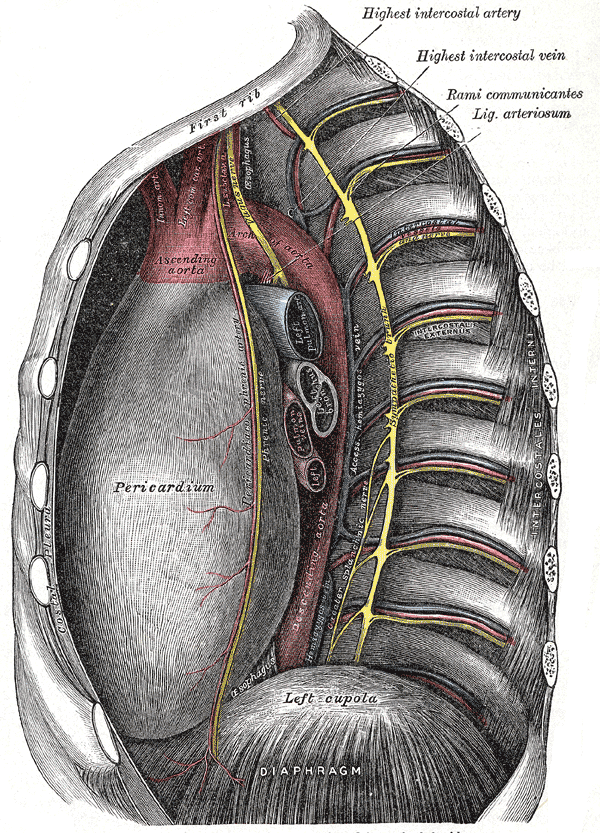
“Al-Watīn” is commonly translated as the aorta, particularly the thoracic aorta. This translation is misleading as it does not fully capture the essence of the term. The thoracic aorta is the main artery that carries oxygenated blood from the heart to the rest of the body. In modern medical terminology, the thoracic aorta includes the ascending aorta, the aortic arch, and the descending thoracic aorta. However, the term “Al-Watīn” more accurately refers to the vital artery that, if severed, results in immediate death. A more precise translation would be “the life artery” or “vital artery” to convey its critical importance to survival.
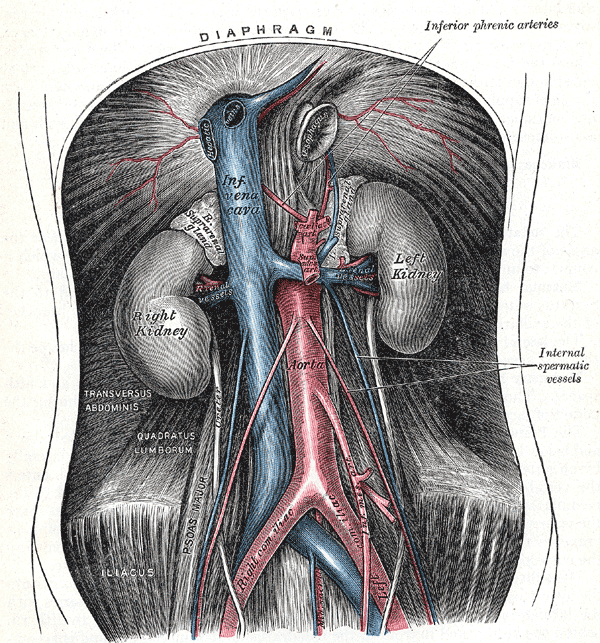
“Al-Abhar,” on the other hand, refers to significant veins or arteries, particularly those in the back or deep within the heart. In modern medical terms, it could refer to the abdominal aorta, which is the continuation of the thoracic aorta as it passes through the diaphragm into the abdomen. The abdominal aorta supplies oxygenated blood to the lower body and vital organs. Recognizing these distinctions clarifies the appropriate contexts in which these terms are used in the Quran and hadith. The term “al-Abhar” should be translated more accurately as “the major artery” or “principal artery” to better reflect its anatomical significance.
Ibn al-Athir explains the term “al-Abhar” as follows:9
فِيهِ « مَا زَالَتْ أكْلَةُ خَيْبَرَ تُعادُّني فَهَذَا أوانُ قَطَعَتْ أَبْهَرِي » الأَبْهَر عِرْقٌ فِي الظَّهْرِ، وَهُمَا أَبْهَرَان. وَقِيلَ هُمَا الْأَكْحَلَانِ اللَّذَانِ فِي الذِّرَاعَيْنِ. وَقِيلَ هُوَ عرقُ مُسْتَبْطِنُ الْقَلْبَ فَإِذَا انْقَطَعَ لَمْ تَبْقَ مَعَهُ حَيَاةٌ. وَقِيلَ الأَبْهَر عِرْقٌ مَنْشَؤُهُ مِنَ الرَّأْسِ وَيَمْتَدُّ إِلَى الْقَدَمِ، وَلَهُ شرايينُ تَتَّصِلُ بِأَكْثَرِ الْأَطْرَافِ وَالْبَدَنِ، فَالَّذِي فِي الرَّأْسِ مِنْهُ يُسَمَّى النّأمَةَ، وَمِنْهُ قَوْلُهُمْ: أسكَتَ اللَّهُ نَأْمَتَهُ أَيْ أَمَاتَهُ، وَيَمْتَدُّ إِلَى الْحَلْقِ فَيُسَمَّى فِيهِ الْوَرِيدَ، وَيَمْتَدُّ إِلَى الصَّدْرِ فيسمَّى الأَبْهَر، وَيَمْتَدُّ إِلَى الظَّهْرِ فيسمَّى الوَتِينَ، والفُؤَادُ معلَّقٌ بِهِ، ويمتدُّ إِلَى الْفَخِذِ فيسمَّى النَّسَا، وَيَمْتَدُّ إِلَى السَّاقِ فيسمَّى الصَّافِنَ. وَالْهَمْزَةُ فِي الْأَبْهَرِ زَائِدَةٌ. وَأَوْرَدْنَاهُ هَاهُنَا لِأَجْلِ اللَّفْظِ. وَيَجُوزُ فِي « أَوَانُ» الضَّمُّ وَالْفَتْحُ: فَالضَّمُّ لِأَنَّهُ خَبَرُ الْمُبْتَدَأِ، وَالْفَتْحُ عَلَى الْبِنَاءِ لِإِضَافَتِهِ إِلَى مَبْنِيٍّ، كَقَوْلِهِ:
Fīhi « mā zālat aklatu Khaybar tuʿāddunī fahādhā awānu qaṭaʿat abharī » al-abhar ʿirq fī al-ẓahr, wa-humā abharān. Wa-qīla humā al-akhalān alladhān fī al-dhirāʿayn. Wa-qīla huwa ʿirq mustabṭin al-qalb fa-idhā inqaṭaʿa lam tabqa maʿahu ḥayāh. Wa-qīla al-abhar ʿirq man sha’uhu min al-raʾs wa-yamtaddu ilā al-qadam, wa-lahu sharāyīn ta-tṭasil bi-akthar al-aṭrāf wa-al-badan, fa-alladhī fī al-raʾs minhu yusammā al-naʾmah, wa-minhu qawluhum : askata-llāhu naʾmatahu ay amātahu, wa-yamtaddu ilā al-ḥalq fa-yusammā fīhi al-warīd, wa-yamtaddu ilā al-ṣadr fa-yusammā al-abhar, wa-yamtaddu ilā al-ẓahr fa-yusammā al-watīn, wa-al-fuʾād muʿallaqun bihi, wa-yamtaddu ilā al-fakhidh fa-yusammā al-nasā, wa-yamtaddu ilā al-sāq fa-yusammā al-ṣāfin. Wa-al-hamzah fī al-abhar zāʾidah. Wa-awrādnāhu hāhunā li-ajli al-lafẓ. Wa-yajūzu fī « awānu » al-ḍammu wa-al-fatḥ : fa-al-ḍammu li-annah khabaru al-mubtadaʾ, wa-al-fatḥu ʿalā al-bināʾ li-iḍāfatihi ilā mabnīn, ka-qawlihi
“In it: ‘The effects of Khaybar’s meal have continued to affect me, and now is the time when it has severed my abhar.’ The abhar is a vein in the back, and they are two abharān. It has also been said that they are the akhal veins in the arms. It is also said to be a vein deep within the heart that, if severed, life cannot continue. It is also said that the abhar is a vein originating from the head and extending to the foot, with arteries connecting to most of the limbs and body. The part in the head is called the naʾmah, and from this comes the phrase ‘askata-llāhu naʾmatahu,’ meaning ‘may Allah silence his naʾmah,’ that is, cause his death. It extends to the throat where it is called the warīd, extends to the chest where it is called the abhar, extends to the back where it is called the watīn, and the heart is connected to it. It also extends to the thigh where it is called the nasā, and extends to the leg where it is called the ṣāfin. The hamzah in al-abhar is extra. We mentioned it here because of the word itself. In ‘awānu,’ both ḍamm and fatḥ are permissible : ḍamm because it is the predicate of the subject, and fatḥ based on its addition to a constructed word, like in the saying:
عَلَي حينَ عاتبْتُ المشيبَ عَلَى الصِّباَ … وَقُلْتُ ألمَّا تَصْحُ وَالشَّيْبُ وَازِعُ
And from the hadith of Ali : ‘‘’He will be thrown into the void with his two abharān severed.’
Additionally, according to Al-Firuzabadi:10
من القَوْسِ والقِرْبَةِ: مُعَلَّقُهُمَا، ومُعَلَّقُ كُلِّ شيء، أو عِرْقٌ غليظٌ نِيطَ به القَلْبُ إلى الوتينِ
Min al-qaws wa-al-qirbah : mu‘allaquhumā, wa-mu‘allaqu kulli shay’, aw ‘irq ghalīẓ nīṭa bihi al-qalbu ilā al-watīn.
“From the bow and the water skin : their suspension mechanism, and the suspension mechanism of everything, or a thick vein to which the heart is connected to the watīn (the main artery).”
These descriptions clarified that “al-Abhar” can refer to various significant veins or arteries, including the abdominal aorta, while “al-Watīn” specifically refers to the aorta, the main artery essential for survival.
B. Misinterpretations and Metaphors
The Quranic verse in Surah al-Haqqah uses “al-Watīn” metaphorically to emphasize the severity of divine punishment for falsehood, implying the severing of the life source. This term is often mistranslated as “aorta,” but a more precise translation would be “vital artery,” reflecting its critical role in sustaining life. The “vital artery” reflects its necessity for survival, aligning with its function as the main artery that supports systemic circulation.
Conversely, the hadith’s use of “al-Abhar” metaphorically describes the Prophet’s intense pain from the poisoned meat. The translation of “al-Abhar” as “aorta” is not entirely accurate; it more closely corresponds to a major blood vessel or artery, potentially the abdominal aorta. This misinterpretation fails to capture the anatomical specificity and metaphorical depth intended in the original Arabic. The “major artery” emphasizes its significant role in the circulatory system without the same immediate life-or-death implication as the “vital artery.”
This use of metaphorical language is consistent with Arabic rhetorical traditions, which convey the gravity of physical suffering through vivid expression. Thus, translating both “al-Watīn” and “al-Abhar” as “aorta” in English texts is a mistranslation. More accurate translations would be “vital artery” for “al-Watīn” and “major artery” for “al-Abhar,” ensuring the precise anatomical and metaphorical nuances are preserved.
Explanation of Kinayah
A. Definition and Application
In Arabic rhetoric, kinayah (كناية) denotes a form of metaphorical expression where a phrase or word conveys a meaning indirectly, often implying something deeper or more nuanced than the literal interpretation. Kinayah is extensively used in Arabic literature and speech to illustrate concepts, emotions, or conditions with vivid and emphatic clarity. This rhetorical device is also common in the Quran and hadith, enhancing the depth and impact of the message.
B. Specific Usage in Hadith
In the hadith describing the Prophet’s suffering, the phrase قطع أبهر (“cutting of the abhar”) functions as a kinayah, expressing the intense pain and suffering he endured. It is not intended to be understood literally as the cutting of an anatomical part but rather as a powerful depiction of his agony. The use of kinayah in Arabic serves to convey the seriousness or intensity of a situation, adding layers of meaning to the narrative.
Prophetic Truthfulness
A. Quranic Affirmations
The Quran itself attests to the unwavering truthfulness of Prophet Muhammad (ﷺ):
وَمَا يَنطِقُ عَنِ الْهَوَىٰ
Wa mā yanṭiqu ‘ani-l-hawā.Translation:
“Nor does he speak from [his own] inclination.11
B. Historical Testimonies
The Prophet’s character as Al-Amin (The Trustworthy) was acknowledged even by his adversaries. A well-documented incident involved the Prophet calling the Quraysh tribes to Mount Safa, asking if they would believe him if he warned them of an impending attack, to which they affirmed his truthfulness:12
صَعِدَ النَّبِيُّ صلى الله عليه وسلم عَلَى الصَّفَا فَجَعَلَ يُنَادِي ” يَا بَنِي فِهْرٍ، يَا بَنِي عَدِيٍّ ”. لِبُطُونِ قُرَيْشٍ حَتَّى اجْتَمَعُوا، فَجَعَلَ الرَّجُلُ إِذَا لَمْ يَسْتَطِعْ أَنْ يَخْرُجَ أَرْسَلَ رَسُولاً لِيَنْظُرَ مَا هُوَ، فَجَاءَ أَبُو لَهَبٍ وَقُرَيْشٌ فَقَالَ ” أَرَأَيْتَكُمْ لَوْ أَخْبَرْتُكُمْ أَنَّ خَيْلاً بِالْوَادِي تُرِيدُ أَنْ تُغِيرَ عَلَيْكُمْ، أَكُنْتُمْ مُصَدِّقِيَّ ”. قَالُوا نَعَمْ، مَا جَرَّبْنَا عَلَيْكَ إِلاَّ صِدْقًا. قَالَ ” فَإِنِّي نَذِيرٌ لَكُمْ بَيْنَ يَدَىْ عَذَابٍ شَدِيدٍ ”. فَقَالَ أَبُو لَهَبٍ تَبًّا لَكَ سَائِرَ الْيَوْمِ، أَلِهَذَا جَمَعْتَنَا
Ṣa‘ida an-nabiyyu ṣallā-llāhu ‘alayhi wa sallam ‘ala aṣ-Ṣafā fa-ja‘ala yunādī “Yā Banī Fihr, Yā Banī ‘Adī!” li-buṭūni Quraysh ḥattā ijtama‘ū, fa-ja‘ala ar-rajulu idhā lam yastaṭi‘ an yakhruja arsala rasūlan li-yanẓura mā huwa, fa-jā’a Abū Lahab wa-Quraysh fa-qāla “ara’aytakum law akhbartukum anna khaylan bi-al-wādī turīdu an tughyra ‘alaykum, akuntum muṣaddiqiyya?” Qālū na‘am, mā jarrabnā ‘alayka illā ṣidqan. Qāla “fa-innī nadhīrun lakum bayna yaday ‘adhābin shadīd.” Fa-qāla Abū Lahab tabban laka sā’ira al-yawmi, a-lihādhā jama‘tanā
Translation:
“When the Verse: ‘And warn your tribe of near-kindred,’ was revealed, the Prophet (ﷺ) ascended the Safa (mountain) and started calling, ‘O Bani Fihr ! O Bani ‘Adi!’ addressing various tribes of Quraish till they were assembled. Those who could not come themselves, sent their messengers to see what was there. Abu Lahab and other people from Quraish came and the Prophet (ﷺ) then said, ‘Suppose I told you that there is an (enemy) cavalry in the valley intending to attack you, would you believe me?’ They said, ‘Yes, for we have not found you telling anything other than the truth.’ He then said, ‘I am a warner to you in face of a terrific punishment.’ Abu Lahab said (to the Prophet) ‘May your hands perish all this day. Is it for this purpose you have gathered us?’ ”
Did Allah’s Protection Fail? Understanding Qurʾān 5:67
A. Divine Protection and Prophetic Integrity
The Quranic verse in Surah al-Haqqah reinforces the Prophet’s authenticity by presenting a hypothetical scenario that never occurred. The concept of divine protection (ismah) in Islam holds that prophets are safeguarded from sin and falsehood, supporting the argument against these baseless allegations.
B. Comparison with Biblical Criteria for False Prophets
The Bible outlines specific signs of false prophets, including :
False Prophecies
- “But a prophet who presumes to speak in my name anything I have not commanded, or a prophet who speaks in the name of other gods, is to be put to death.” (Deuteronomy 18:20)
- “When a prophet speaks in the name of the Lord and the thing does not happen or come true, that is a message the Lord has not spoken.” (Deuteronomy 18:22)
Leading People Astray
“If a prophet, or one who foretells by dreams, appears among you and announces to you a sign or wonder, and if the sign or wonder spoken of takes place, and the prophet says, ‘Let us follow other gods’ (gods you have not known) and let us worship them, you must not listen to the words of that prophet or dreamer.” (Deuteronomy 13:1 – 3)
Immoral Behavior
“But the prophet who speaks presumptuously in my name anything I have not commanded, or a prophet who speaks in the name of other gods, that prophet shall die.” (Deuteronomy 18:20)
Inconsistency with Previous Revelation
“To the law and to the testimony! If they do not speak according to this word, it is because they have no dawn.” (Isaiah 8:20)
Prophet Muhammad (ﷺ) does not fit any of these criteria. His prophecies were accurate, he led people to the worship of the One God, his character was impeccable, and his message was consistent with previous revelations.
C. Consistency, Prophethood, and the Problem of Selective Tests
If Deuteronomy and Isaiah are to be treated as binding criteria for identifying false religious claimants, then methodological integrity requires that these standards be applied consistently rather than selectively. When this consistency test is applied beyond Islam, the contrast between Prophet Muhammad ﷺ and Paul of Tarsus becomes instructive.
Paul’s authority rests almost entirely on a private revelatory experience, which he explicitly distinguishes from any transmission received through prior apostolic channels.13 His theological programme is widely recognised — within Christian scholarship itself — as introducing substantive departures from earlier law-centred revelation, particularly in matters of Mosaic law and justification.
By contrast, Prophet Muhammad’s ﷺ message was proclaimed publicly, transmitted verbatim, continuously scrutinised by followers and opponents alike, and explicitly presented as a reaffirmation of uncompromising monotheism in continuity with earlier prophets.
Significantly, the New Testament itself does not narrate Paul’s death. Acts concludes with Paul alive and preaching in Rome (Acts 28:30 – 31), and the only passage commonly cited near the end of his life employs metaphorical, cultic language rather than historical description:
“For I am already being poured out like a drink offering, and the time for my departure has come” 14
Claims about Paul’s execution, therefore, rest not on Scripture but on later ecclesiastical tradition. The earliest source, 1 Clement (c. 96 CE), refers to Paul’s martyrdom without specifying the manner of death.15 The explicit claim that Paul was executed by beheading appears only in fourth-century historiography, most notably in Eusebius16 and Jerome17, who associate his death with Nero’s persecution. Whether or not one accepts the full details of this tradition, the essential point remains that Paul’s end is reconstructed retrospectively rather than narrated by revelation. When these facts are set alongside the biblical criteria themselves, the asymmetry in polemical application becomes evident. Deuteronomy warns against figures who introduce teachings that deviate from prior revelation18, who speak presumptuously in God’s name19, or whose message fails the test of continuity with established law and testimony20. These warnings are rarely turned inward toward Pauline authority, despite long-standing debates over the scope and legitimacy of his theological innovations. Instead, the criteria are selectively externalised and aimed at Islam.
This inconsistency becomes even more pronounced when critics attempt to collapse the Prophet’s ﷺ final illness into the Qur’anic warning of Surah al-Haqqah (69:44 – 46). That passage presents a counterfactual threat: if the Messenger were to fabricate revelation, then God would seize him and sever the watīn. Its rhetorical force lies precisely in its hypothetical structure, functioning as a guarantee of authenticity rather than a veiled prediction. Historically, however, the Prophet ﷺ completed his mission, lived for years after the Khaybar incident, and passed away following an acute febrile illness while describing residual pain in the idiom of kinayah. Nothing in this sequence resembles the immediate, decisive divine punishment envisaged in Q69:44 – 46. To claim fulfilment here requires collapsing conditional rhetoric into retrospective prophecy, metaphor into anatomy, and a human poisoning attempt into divine judgement — moves that are linguistically, chronologically, and theologically unsustainable.
The irony deepens when Galatians 1:8 is invoked as a final weapon against Islam:
“Even if we or an angel from heaven should preach a gospel other than the one we preached to you, let him be accursed.”
This verse is routinely deployed to pre-emptively invalidate any subsequent revelation, yet it rests entirely on Paul’s own solitary revelatory authority. In effect, it functions as a self-sealing mechanism that insulates Pauline theology from all later claims, regardless of their continuity with earlier prophetic monotheism.21
The Qur’anic model, by contrast, does not immunise Muhammad ﷺ from scrutiny; it exposes him to the severest conceivable consequence if he were to fabricate revelation. The selective invocation of Galatians 1:8 against Islam, while ignoring its circular logic and its dependence on Paul’s private revelation, mirrors the same methodological inconsistency already evident in the use of Deuteronomy and Isaiah.
Some Polemical Observations
It is important to note how polemical presentations often combine three separate issues into one accusation: the historical backdrop to Khaybar, the poisoning incident itself, and the Prophet’s final illness in Madinah. The argument typically depends on sliding between these themes as though they were one continuous proof. Yet the Qur’anic claim (Q69:44 – 46) is a conditional warning about fabricating revelation; the Khaybar reports concern an attempted poisoning within a particular historical moment; and the Prophet’s final illness is described in the sources as a distinct febrile episode.
One recurring framing asserts that the Treaty of Hudaybiyyah was a humiliating failure, that Qur’an 48:1 was a “convenient revelation” to save face, and that Khaybar was therefore a substitute target for “booty.” This rhetorical chain is not an argument about the Prophet’s death; it is an attempt to recast his political judgement as opportunism, and then use that framing to pre-load the poisoning narrative with moral insinuations. Even if a critic persuades an audience that Hudaybiyyah looked unfavourable on the day it was signed, it still does not follow that:
(i) a poisoning three years earlier “proves” imposture, or
(ii) the Qur’anic conditional threat in 69:44 – 46 was realised.
The core evidentiary question remains medical and linguistic: did the Prophet die from an immediate severing of the watīn as punitive judgement, or did he die after an acute febrile illness while describing residual pain in the idiom of kinayah?
Another recurrent move is to inflate the poisoning account into a “prophethood test” with a rigid rule: “a true prophet must detect poison before tasting it; otherwise he is false.” This rule is not supplied by the Qur’an, nor by the hadith corpus itself as a doctrinal criterion. In the Sunni hadith framing cited later, the woman’s intention was precisely to see whether he was a prophet or a king, but her private intention does not become a binding standard for what prophethood must look like.
More importantly, the reports do not depict total ignorance that persists until after consumption. They present a sequence in which he tasted, recognised, and stopped others; one companion died quickly; the Prophet lived on for years; and later described pain in a metaphor that classical lexicographers do not treat as a literal anatomical claim. That sequence is compatible with a human experience of tasting harmful food and then halting ingestion, which is exactly why the linguistic treatment of abhar versus watīn matters: the polemical argument depends on collapsing the two into one “aorta-cutting” literalism.
A further move is to stack grisly allegations about Khaybar — executions, torture, enslavement, marriage to Ṣafiyyah — then treat the poisoning as a kind of moral payback that “explains” his death. Whatever one’s ethical judgement about seventh-century warfare, this is still not proof of divine retribution under Q69:44 – 46. The Qur’anic passage is about fabricating revelation; it does not say, “If you fight X group, We will kill you by poison.” The ethical debate about Khaybar can be discussed on its own terms, but it is methodologically invalid to use it as a shortcut to a claim about Qur’anic falsification.
It is also common to argue that because the Prophet sought treatment — ruqyah by al-Mu‘awwidhatayn, cupping, medicine — this proves he did not believe God willed his death, or that divine protection “failed.” This misreads how classical theism treats means (asbāb). In Islamic theology and practice, taking lawful means is not the negation of trust in God; it is part of human responsibility. People eat to live and still believe God is al-Razzāq; they seek medicine and still believe healing is from God. The hadith material about ruqyah and treatment therefore does not function as an admission of “game is up,” but as ordinary prophetic practice that teaches the community how to act under illness.
Finally, polemical presentations often shift from “poison proves he was not a prophet” to a second claim: “his death caused political confusion; therefore God did not protect the community; therefore Islam is false.” This is a separate argument altogether and relies on a theological assumption that revelation must always prevent political contestation. Even within the Bible, communities fracture after prophets; that fact is not normally treated as proof that the prophet was false. The Sunni-Shi‘a split cannot be used as a retrospective test for whether a prophet was genuine unless the critic is willing to apply the same standard consistently across religious history.
Conclusions
The misconception that Prophet Muhammad (ﷺ) suffered before his death due to lying is a gross misinterpretation of Qur’anic and hadith texts. Historical context, linguistic analysis, and theological principles affirm the Prophet’s unwavering truthfulness. The Qur’anic verse in Surah al-Haqqah and the hadiths describing the Prophet’s suffering are distinct in their contexts. The Prophet’s impeccable character, validated by historical records and acknowledged by his adversaries, refutes these baseless allegations.
A detailed look at the Biblical criteria for false prophets further supports the authenticity of Prophet Muhammad (ﷺ). His accurate prophecies, adherence to monotheism, moral integrity, and consistency with previous revelations align with the true characteristics of prophets.
And most certainly, only God knows best!
Appendix: Historically Plausible Poisons in 7th-Century Arabia
Any assessment of the Khaybar poisoning must be restricted to substances that were locally available, commonly known, or realistically obtainable through regional trade in the Hijaz during the 7th century. When this constraint is applied, the range of plausible poisons narrows sharply. Crucially, none of them support the claim of a poison remaining dormant for years and then causing death.
The incident itself is preserved in multiple hadith reports, which consistently describe immediate recognition of poisoning, acute effects on those who consumed the meat, and the prevention of further ingestion once the danger became apparent. One Companion, Bishr ibn al-Barāʾ, is reported to have died from the poisoned meat, while the Prophet Muḥammad ﷺ tasted it and refrained from continuing. This establishes the episode as an acute poisoning attempt, not a delayed or cumulative exposure.
A later narration from ʿĀʾishah reports that during the Prophet’s final illness, he recalled pain associated with what he had eaten at Khaybar and expressed it figuratively as feeling “as if my aorta is being cut.” Similar wording appears elsewhere. This expression is experiential and rhetorical, not a medical diagnosis or toxicological explanation for the cause of death.
The decisive question, therefore, is whether any poison realistically accessible in 7th-century Arabia could remain inert for three to four years and then suddenly cause death without an intervening pathological course.
1. Colocynth (Citrullus colocynthis, bitter apple)
Colocynth is the strongest candidate historically. It is native to Arabia and widely known in pre-Islamic and early Islamic medicine as a powerful purgative that becomes dangerous when misused. No trade network or specialist knowledge would have been required to obtain or deploy it.
It causes severe gastrointestinal irritation, including abdominal pain, vomiting, diarrhea, dehydration, and shock, with onset within hours of ingestion. Survival beyond the acute episode does not lead to delayed fatal collapse. Colocynth has no cumulative or latent toxic mechanism.
2. Arsenic (inorganic arsenic compounds)
Arsenic was a well-known poison in antiquity and could realistically have been obtained through regional trade networks linking Arabia with Persia, Yemen, and the Levant. It required no sophisticated preparation and was historically used for both poisoning and medicine.
Acute arsenic poisoning produces severe gastrointestinal symptoms and systemic collapse within hours to days. Chronic arsenic poisoning, by contrast, requires repeated or sustained exposure and manifests through continuous multisystem damage affecting the skin, nerves, liver, and cardiovascular system. A single exposure that allows survival would not remain biologically inert for years and then suddenly become fatal.
3. Hemlock-type neurotoxins (Conium maculatum or related plants)
Hemlock and similar neurotoxic plants were known throughout the Near East via Jewish and Greco-Roman medical traditions. While not native to the Hijaz, knowledge of such poisons and limited access are historically plausible, particularly in a Jewish settlement such as Khaybar.
Hemlock causes ascending neuromuscular paralysis, leading to respiratory failure in severe cases. Death occurs within hours to days, depending on dosage, and survivors exhibit clear and progressive neurological symptoms. There is no mechanism for silent persistence over multiple years.
4. Lead compounds
Lead exposure was common in antiquity through vessels, glazes, and medicinal preparations, making accidental or intentional ingestion possible.
Acute lead poisoning causes abdominal pain and neurological symptoms, while chronic lead poisoning requires sustained exposure and manifests with ongoing cognitive, gastrointestinal, and renal pathology. A single exposure cannot explain sudden death years later without continuous symptoms, which are absent from the historical record.
5. Mercury compounds
Mercury was known in ancient medicinal and alchemical contexts and could have been accessed indirectly, but it is the least plausible candidate in this context.
Mercury toxicity is characteristically chronic, requiring repeated exposure and producing progressive neurological deterioration, tremors, and behavioral changes. There is no evidence for a one-time dose remaining inert for years and then becoming fatal without a prolonged and obvious disease course.
Medical and historical assessment
Across the five most realistic poison candidates available in or accessible to 7th-century Arabia — desert plants, traded mineral toxins, heavy metals, and regionally known neurotoxins — there is no medically-documented substance that fits the polemical requirement of:
a single ingestion → minimal immediate effect → multi-year dormancy → sudden death
Toxicology operates according to only three patterns:
- Acute lethality (hours – days),
- Chronic illness with continuous symptoms (requiring repeated exposure), or
- Non-lethal survival once the acute phase passes.
There is no fourth category that allows a poison to “wait” several years before acting decisively.
Concluding remarks
Given the types of poisons known in the 7th century and their typical effects, the claim that the Khaybar poisoning lingered for three to four years and then killed the Prophet Muḥammad ﷺ is neither medically nor historically defensible. The sources describe an interrupted human poisoning attempt, not a delayed execution. Qurʾān 69:44 – 46 does not envision a slow, latent, or ambiguous outcome; it sets forth a counterfactual threat of immediate and decisive divine action — public seizure and the cutting of the watīn — if fabrication had occurred.
The Khaybar episode, by contrast, involved acute effects, cessation of ingestion, and a death years later from natural causes. No poison realistically accessible in 7th-century Arabia can bridge these two frameworks. To insist otherwise is to collapse a conditional divine judgement into a delayed biological process, importing polemics back into both toxicology and the Qurʾānic text. The two are categorically distinct and cannot be coherently conflated.
Frequently-Asked Questions: The Death of Muhammad — Cause, Date, and Aftermath
If Muhammad were a real prophet of God, why didn’t he detect the poison before he ate it?
The objection imports a standard Islam never set. Prophethood in Islamic theology does not confer omniscience, continuous supernatural perception, or physical invulnerability. The Qurʾān states explicitly that the Prophet ﷺ did not possess knowledge of the unseen except what was revealed to him, and classical scholars have always maintained that prophets are human beings subject to illness, injury, and death. The relevant test is therefore not whether he detected danger before eating but whether his passing corresponds to the divine judgement threatened in Q. 69:44 – 46 — a counterfactual warning of immediate, public seizure and the severing of the watīn if fabrication had occurred. It did not. He completed his mission, passed away after an acute febrile illness approximately four years after the Khaybar incident, and left behind a transmitted revelation that continues to be scrutinised and preserved. None of this resembles the decisive, instantaneous divine punishment the passage describes.
If it was God’s will for Muhammad to have eaten the poison, why did he seek treatment and try to recover? Even Gabriel prayed for him to get better.
Islamic theology draws a consistent distinction between taking permissible means (asbāb) and the outcome of those means, which belongs to Allah alone. The Prophet ﷺ himself instructed the community to seek medical treatment, saying that Allah has not created a disease without creating a cure for it. Seeking remedy does not imply doubt about divine decree; it is precisely the prophetically modelled response to illness. A person who eats to sustain life does not thereby deny that Allah is al-Razzāq; a person who seeks medicine does not thereby deny that healing belongs to Allah. The same logic applies to supplication. Jibrīl’s prayer, if the report is accepted, is an act of worship and intercession consistent with his created role; it is not a negotiation with a fixed decree. That the supplication was not answered in the form of recovery tells us nothing about whether the illness was divinely willed; unanswered prayer is a universal human experience that theologians of every tradition have grappled with and that does not, in any tradition, function as proof of false prophethood.
Why would Gabriel pray if Allah had already decreed death? Does this mean Gabriel did not know Allah’s will?
Angels in Islamic theology are not omniscient. They act within the roles and capacities appointed to them, and supplication is itself an appointed means: one that can coexist with a decreed outcome without contradiction. The question assumes a model in which knowledge of divine decree would prevent a created being from making duʿāʾ, but this is not how Islamic theology frames the relationship between knowledge, will, and action. Human beings make duʿāʾ knowing they will die; this does not make their prayers irrational or evidence of ignorance. The same applies to angelic intercession. Classical theologians have explained that supplication is itself part of the fabric of divine decree — the prayer is decreed, and so is the outcome it precedes or accompanies. There is no contradiction in the narration and no implication that Jibrīl acted outside his knowledge.
Why did Muhammad require others to drink the same medicine he was given, including someone who was fasting? Doesn’t this seem vindictive?
The classical commentators understood this episode as a firm refusal of unsolicited medical intervention rather than an act of retaliation. Having already objected to the treatment being administered, the Prophet ﷺ reportedly stipulated that those present share in it — a practice understood within the tradition as a deterrent against forcibly medicating him against his expressed wishes. Whether one reads the episode sympathetically or critically, it remains a question of prophetic conduct and medical ethics, not a question about prophethood itself. The criteria for identifying true and false prophets in Islamic and biblical tradition concern the content of revelation, the accuracy of prophecy, and moral integrity in matters of doctrine — not every decision made during a final illness. Even a harsh reading of this incident does not touch the evidentiary question of whether Q. 69:44 – 46 was realised.
Why did Muhammad warn against graves becoming places of worship near death instead of praying for guidance for others? Was this a curse?
These statements belong to a consistent and well-documented strand of prophetic teaching against the sacralisation of burial sites and grave-veneration, a concern that runs throughout the hadith corpus and is not unique to his deathbed. They are doctrinal warnings directed at a specific religious practice: the conflation of commemoration with worship and are entirely consistent with the Qurʾānic emphasis on tawḥīd. To characterise them as expressions of jealousy or personal bitterness is to project a psychological motive onto a theological statement. The fact that similar warnings appear in earlier hadith transmissions and were directed at the graves of the righteous generally, not only his own, confirms that this is a recurring teaching rather than a reactive remark. Nothing in these statements constitutes a departure from prophetic character, and nothing in them is relevant to the cause of his passing.
Why is pleurisy sometimes linked to “Satan” in reports, while poisoning is not?
The narration in question — in which the Prophet ﷺ is reported to have said that pleurisy (dhāt al-janb) comes from al-shaytān — is understood by classical scholars not as a medical aetiology but as a spiritual-rhetorical warning, possibly cautioning against attributing illness to causes that compete with reliance on Allah, or signalling something about the nature of that particular suffering. The Arabic usage of shaytān in medical contexts within pre-Islamic and early Islamic literature is not uniform and does not always carry the same theological weight as its usage in doctrinal contexts. More importantly, the question of why one illness is described in one rhetorical register and another in a different register is a question about linguistic convention and hadith genre, not a question about prophethood. Neither report establishes or refutes the cause of the Prophet’s death, and the asymmetry between them reflects nothing more than the diversity of expression within the hadith corpus.
Did the so-called “prophet test” (poisoning) prove Muhammad was not a prophet because he ate from it?
No. The “prophet test” is not a criterion derived from the Qurʾān, the hadith corpus as a doctrinal standard, or any classical Islamic definition of prophethood. It is a criterion constructed retrospectively from the woman’s private stated intention at Khaybar. Zaynab bint al-Ḥārith told the Prophet ﷺ that she wanted to know whether he was a prophet or a king but her privately held expectation does not become a binding criterion for what prophethood must look like. A standard invented by an assassin cannot be used to adjudicate the authenticity of revelation. Furthermore, the reports do not depict a prophet who consumed the poison unknowingly and continued eating. They describe a sequence in which he tasted, was informed of the poison through a miraculous sign, immediately warned others to stop, and survived while one companion who ate more died quickly. The sequence is compatible with human perception of a harmful substance followed by cessation of ingestion, and it is entirely unlike the total ignorance that the polemical framing requires.
Does the statement “I feel my abhar is being cut” mean Qur’an 69’s watīn was fulfilled?
No, and the reason is both linguistic and logical. Q. 69:44 – 46 uses al-watīn within a counterfactual conditional (law): if fabrication had occurred, Allah would have seized the Prophet by the right hand and severed the watīn. The grammatical structure of the Arabic makes clear this is a hypothetical that did not and would not happen — it functions as a guarantee of authenticity, not a prediction of punishment. The ḥadīth, by contrast, uses al-abhar — a different term entirely. Ibn al-Athīr’s Kitāb al-Nihāyah (1.18) documents multiple competing definitions of al-abhar within classical Arabic lexicography, ranging from veins in the back to vessels in the arms, and notes explicitly that it extends to the chest where it is called al-abhar and to the back where it is called al-watīn — they are not identical anatomical referents. Beyond the lexical distinction, the phrase itself functions as kinayah in Arabic rhetoric: a vivid figurative expression of agonising pain rather than a clinical anatomical report. Classical Arabic literature uses the idiom of severed arteries to convey extreme suffering without implying literal physiology. To treat the ḥadīth expression as the fulfilment of the Qurʾānic warning requires collapsing two different Arabic terms into one English translation, treating figurative language as literal description, and reading a counterfactual as a prediction — three separate moves, each of which independently fails scrutiny.
Does the moral indictment of Khaybar prove false prophethood?
No. The attempt to establish false prophethood through ethical criticism of the Khaybar campaign conflates two entirely separate questions. Historical and ethical debates about 7th-century warfare must stand on their own terms and be assessed against the norms of that context, the conduct of comparable polities, and the internal logic of early Islamic military history. They cannot be used as a shortcut to a claim about Qurʾānic fabrication. Q. 69:44 – 46 is not a verse about military conduct; it is a verse about inventing divine revelation. Even if a critic’s harshest reading of Khaybar were granted in full, it still would not follow that the Qurʾānic warning was realised at the Prophet’s death. The two arguments — the moral critique and the prophetic authenticity claim — need to be assessed independently, and polemical presentations that slide between them are committing a category error, not advancing an evidential argument.
If figures in other scriptures survived poison or venom, why didn’t Muhammad?
The comparison most commonly invoked here is Acts 28:3 – 5, where Paul survives a viper bite on Malta, which bystanders interpret as a miraculous sign. The comparison fails on multiple grounds. First, Islam never claimed that the Prophet ﷺ would survive all poison — no such criterion of prophethood exists in the Qurʾān or the normative hadith corpus. Second, survival of venom is not a consistent biblical standard either: numerous prophets were killed, imprisoned, or allowed to suffer without miraculous physical deliverance, and this is not treated within the biblical tradition as proof of false prophethood. Third, the Khaybar incident itself includes what the classical sources present as a miraculous sign — the shoulder informing him of the poison, causing him to halt ingestion and warn others — which is why Zaynab acknowledged his prophethood. The question therefore rests on an invented standard, applied selectively, and compared across traditions that do not share the same criteria for divine favour.
If Muhammad did not clearly name a successor, doesn’t later division show lack of divine protection?
The premise contains two embedded assumptions that do not hold. The first is that divine protection of a prophet requires the prevention of all political contestation after his death. The second is that transmission of revelation depends on political unity in succession. Neither is a principle found in Islamic theology, nor is it consistently applied in the study of other religious traditions. Within the biblical tradition, David’s kingdom divided immediately after Solomon; the community of Moses experienced repeated fracture and apostasy within his own lifetime; the followers of Jesus divided within decades of the crucifixion into communities whose disagreements produced the New Testament canon debates, the Council of Nicaea, and centuries of Christological controversy. None of these divisions is standardly invoked as proof that the preceding prophet was false. The Sunni-Shiʿa split is a question of political history and jurisprudential development that can be studied on its own terms. It does not constitute a retrospective test of prophetic authenticity unless the same standard is applied with consistency across the full breadth of religious history and it never is.
Did Muhammad die suddenly, proving he was poisoned to death?
The sources do not describe a sudden, unexplained collapse. They describe a progressive febrile illness lasting approximately thirteen days, during which the Prophet ﷺ continued to lead prayers when physically able, gave final instructions to the community, and passed away in a recognisable pattern of acute infectious illness — intense fever, severe headache, and physical weakness — consistent with conditions endemic to Madīnah, including what modern historians such as Welch have described as Medinan fever aggravated by physical and mental fatigue.⁵ Bishr ibn al-Barāʾ, who consumed more of the poisoned meat at Khaybar and died within days of that incident, is the figure in the sources whose death pattern resembles acute poisoning. The Prophet’s death, occurring years later after a distinct illness with a distinct clinical course, does not match that pattern. The classical sources distinguish the two episodes, and toxicological assessment of substances available in 7th-century Arabia confirms that no single ingestion of any realistically accessible poison could remain biologically inert for three to four years and then suddenly cause death without an intervening and documentable disease course.

- Surah al-Haqqah, 69:44 – 46[⤶]
- Surah al-Ma’idah, 5:3[⤶]
- Sahih al-Bukhari, 4428[⤶]
- Sunan Abi Dawud, 4512[⤶]
- Welch speculates that Muhammad’s death was caused by Medinan fever, which was aggravated by physical and mental fatigue. See: Frants Buhl, & Alford T. Welch (1993). “Muḥammad”. Encyclopaedia of Islam. Vol. 7 (2nd ed.). Brill. pp. 360 – 376[⤶]
- Ibn al-Qayyim. Zad al-Ma’ad, 3.298[⤶]
- Figure 530 : Anatomy of the Human Body, Bartleby.[⤶]
- Figure 531 : Anatomy of the Human Body, Bartleby.[⤶]
- Ibn al-Athir, Kitab al-Nihayah fi Gharib al-Hadith wa al-Athar, 1.18[⤶]
- Al-Firuzabadi, Al-Qamus al-Muhit, 691[⤶]
- Surah al-Najm, 53:3[⤶]
- Sahih al-Bukhari, 4770[⤶]
- See Acts 9:3 – 6; Galatians 1:11 – 12; 1:16 – 17[⤶]
- 2 Timothy 4:6[⤶]
- 1 Clement 5.5 – 7[⤶]
- Ecclesiastical History 2.25.5 – 8[⤶]
- De Viris Illustribus §5[⤶]
- Deuteronomy 13:1 – 3[⤶]
- Deuteronomy 18:20[⤶]
- Isaiah 8:20[⤶]
- For a detailed examination of the Pauline departure from earlier prophetic monotheism, cf. Mohd Elfie Nieshaem Juferi, Paulus Perosak Risalah al-Masīḥ (Seri Kembangan: Langgam Fikir, 2025)[⤶]