
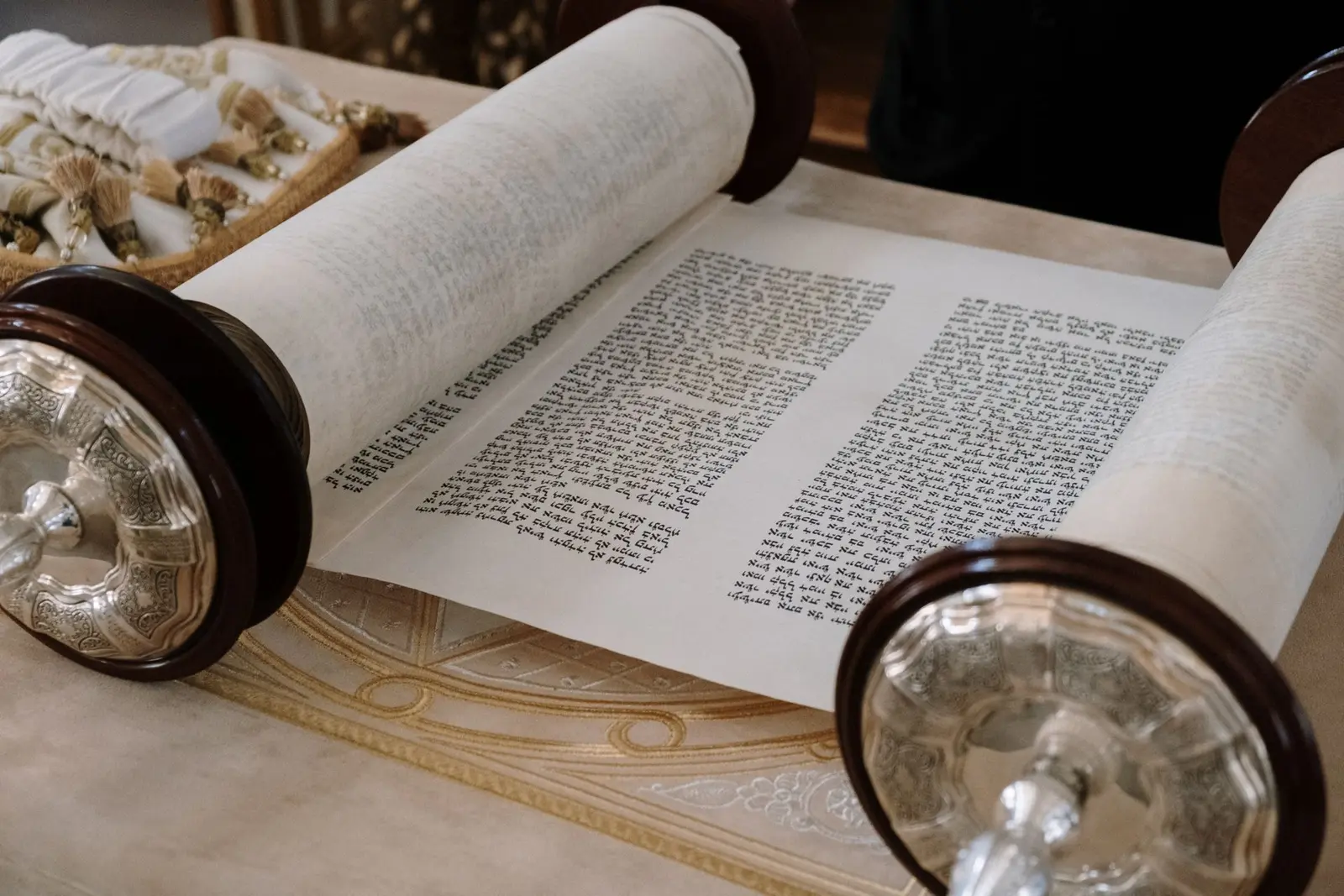
Christian missionaries who write about Islam rarely miss a chance to speak about women. The charge is always the same: that Islam degrades women, and that the Bible honours them. A Muslim who answers is entitled to ask for one courtesy in return, that the Bible be read with the same care its defenders demand for the Qur’an. There is no better place to begin than Deuteronomy 22:28-29, two verses that more readers search for than almost any other passage in the law of Moses.
The verses are short. A man finds a young woman who is a virgin and not betrothed; he takes hold of her and lies with her; they are discovered. The man pays her father fifty shekels of silver, the woman becomes his wife, and he may never divorce her. To most readers today this sounds like a law that makes a raped girl marry her rapist. Missionary apologists answer that it is nothing of the kind: the verses describe seduction, they say, and the law protects the woman.
This article weighs both readings. It sets the verses in their chapter, reads the Hebrew words they use, compares the parallel law in Exodus and the older laws of Assyria, asks how the Jewish rabbis applied them, and then sets beside them what Islamic law says about the woman who is forced. Bible quotations are from the King James Version; Qur’an translations are from Yusuf Ali.1
The text of Deuteronomy 22:28-29
In the King James Version the law reads:
If a man find a damsel that is a virgin, which is not betrothed, and lay hold on her, and lie with her, and they be found; Then the man that lay with her shall give unto the damsel’s father fifty shekels of silver, and she shall be his wife; because he hath humbled her, he may not put her away all his days.
Deuteronomy 22:28–29
Modern translations divide over the key verb. The New International Version says plainly that the man “rapes her”. The English Standard Version and the New Revised Standard Version say that he “seizes her”.2 No major translation says that she agreed. Whatever the verb means, three things in the law are not in dispute: the payment goes to her father, the marriage is commanded, and the divorce is forbidden.
Five cases in one chapter
The verses close a run of laws on sexual offences that begins at Deuteronomy 22:13. Read together, they show the logic of the whole.
- A husband who falsely accuses his bride of not being a virgin pays her father a hundred shekels and may never divorce her; if the charge is true, she is stoned at her father’s door (22:13–21).
- A man found lying with a married woman dies, and so does she (22:22).
- A betrothed virgin who lies with a man in the city is stoned with him, “because she cried not, being in the city” (22:23–24).
- A betrothed virgin forced in the field is innocent; the man alone dies, for “the betrothed damsel cried, and there was none to save her” (22:25–27).
- A virgin who is not betrothed, seized and lain with, is married to the man, who pays her father fifty shekels (22:28–29).
The last two cases are the ones that matter most. When the woman is betrothed and forced, the law treats the crime as a capital one: “as when a man riseth against his neighbour, and slayeth him, even so is this matter.”3 When the woman is not betrothed, the same act costs the man fifty shekels and a wedding. Her suffering is the same in both cases. What changes is whether another man already had a claim on her.
The American scholar Carolyn Pressler, in the standard study of these laws, draws exactly this conclusion: the Deuteronomic family laws are concerned above all with the authority of the father and the husband over the women of the household, and the woman’s own will is not the question they ask.4 The betrothed woman in the city who “cried not” is stoned because the law assumes that her silence was consent. Nothing in the chapter asks what a frightened girl, threatened with a knife, might have done.
What the Hebrew says
The case for seduction rests on one observation. In verse 25 the man who forces the betrothed woman is said to heḥĕzîq bāh, from the verb ḥāzaq, “to be strong, to overpower”. In verse 28 the man tĕpāśāh, from the verb tāpaś, “to take hold of”. Paul Copan, the best-known Christian defender of this reading, argues that the second verb is milder, that verse 28 does not describe force, and that the law is the same as the law of seduction in Exodus.5
The argument does not survive a look at how the Bible uses the word. Tāpaś is the verb for seizing someone who does not want to be seized. Potiphar’s wife “caught him by his garment” when Joseph fled from her.6 The parents of the rebellious son “lay hold on him, and bring him out” to be stoned.7 Joshua’s soldiers “took alive” the king of Ai, and Elijah ordered the people to “take the prophets of Baal”, whom he then killed at the brook Kishon.8 The standard Hebrew lexicon of Brown, Driver and Briggs gives its meaning as “lay hold of, seize”, and lists the arrest of men in war among its uses.9 Not one of these people consented to being taken.
The law itself then names what the man has done. He must marry her “because he hath humbled her”, ʿinnāh, from the verb ʿānâ. It is the Bible’s word for sexual violation. Shechem “took” Dinah, “and lay with her, and defiled her”: the same verb.10 Amnon, “being stronger than she, forced her, and lay with her”: the same verb, which the King James translators rendered “forced”.11 The Levite’s concubine at Gibeah, abused all night until she died, was “forced”: the same verb.12 Brown, Driver and Briggs list these passages together under one heading: to humble a woman by forcing her.13 Deuteronomy 22:29 is in the list.
The Jewish commentator Jeffrey Tigay, writing for the Jewish Publication Society, reads the verse the same way: as a case of force, and for that reason a different case from the seduction of Exodus.14 The apologists who say otherwise have to explain why a law about a willing partner would describe the man as seizing her and humbling her, in the very words the Bible uses for Shechem and Amnon.
Seduction in Exodus 22:16-17
The Torah does have a law about seduction, and it is worded differently:
And if a man entice a maid that is not betrothed, and lie with her, he shall surely endow her to be his wife. If her father utterly refuse to give her unto him, he shall pay money according to the dowry of virgins.
Exodus 22:16–17
Here the man “entices” her, yĕpatteh, from pātâ, the verb for persuading or deceiving. Here too the woman is married to the man, unless her father refuses, in which case he takes the bride-price without the wedding. Set beside it, Deuteronomy 22:28-29 makes three changes. The man seizes rather than entices; the father’s right to refuse is not mentioned; and the man may never divorce her.
If Deuteronomy were simply repeating Exodus, these changes would be hard to explain. Read as a separate case, they make sense: the seducer can be refused, while the man who has used force is bound for life to the woman he has harmed. Either way the woman is not asked. In Exodus her father decides; in Deuteronomy nobody decides, because the law has already decided for her.
The older law of Assyria
Israel’s law was not written in a vacuum. The Middle Assyrian Laws, copied in the second half of the second millennium before Christ, contain a case that is almost the same. If a man seizes a virgin who is not betrothed and rapes her, her father may take the rapist’s own wife to be raped in turn, and may give his daughter in marriage to the rapist, who pays three times the value of a virgin in silver; if the father does not wish it, he takes the silver and gives his daughter to whom he pleases. If the girl gave herself willingly, the man swears to it, pays the triple silver, and the father treats his daughter as he wishes.15
The resemblance is plain: a payment to the father and a marriage to the man. The Assyrian law at least separated the girl who was forced from the girl who agreed, and left the father free to refuse the rapist. Deuteronomy gives the father no such choice and the girl none at all. Christians who present the Mosaic law as a moral advance on its neighbours should notice that, on this point, the advance is hard to find.
How the rabbis applied it
The Jewish sages, who lived by this law and studied every word of it, did not doubt that it dealt with rape. The Mishnah, compiled around the year 200, distinguishes the seducer, mĕpatteh, from the violator, ʾônēs, and assigns Deuteronomy 22:28-29 to the violator. The seducer pays three kinds of compensation; the violator pays four, because he must also pay for her pain. And the violator, says the Mishnah, “must drink out of his earthen pot”: he must marry her, even if she is lame, blind or afflicted with boils, and may never send her away.16
The rabbis then did something the text does not do. Reading Deuteronomy together with Exodus, they ruled that the marriage could go ahead only if the girl and her father wanted it; if either refused, the man paid and the marriage did not happen.17 Moses Maimonides set this down as settled law in the twelfth century.18 It is an honourable reading, and it shows that the Jewish sages felt the problem as keenly as any modern reader. But it is their reading, added to the text from outside. Deuteronomy 22:28-29 itself says “she shall be his wife”, and says nothing of what she wants.
The missionary defences
Christian apologists who accept that the verses may involve force usually offer one of three defences.
The first is that the law protected the woman. In a society where a girl who had lost her virginity could not hope to marry, the law guaranteed her a husband, food and a home for life, and forbade him ever to cast her off. There is truth in the description of the society. The Bible itself shows it. When Amnon had raped his half-sister Tamar and ordered her out, she begged him to keep her: “There is no cause: this evil in sending me away is greater than the other that thou didst unto me.”19 But a law that answers a crime by giving the victim to the criminal does not cure the shame; it confirms it. The rapist keeps what he took and pays the price of a bride. The woman’s protection consists of living for the rest of her life with the man who violated her.
The second defence is that the law limited the man: he could never divorce her, and in the Bible’s world divorce was the husband’s right alone.20 This is a real burden on the man, but it is a heavier one on the woman. She cannot divorce him either. A prohibition on divorce, imposed on a marriage that began in violence, is a life sentence for both of them, and only one of them committed the crime.
The third defence is that the civil laws of Israel do not bind Christians today. That may be true, but it does not touch the question. The question is not whether a church in London enforces Deuteronomy, but whether the law came from God, as the Bible says it did. Moses presented these very statutes as the proof of Israel’s wisdom: “what nation is there so great, that hath statutes and judgments so righteous as all this law, which I set before you this day?”21 The psalmist sang that “the law of the LORD is perfect”, and Jesus said that not one jot or tittle of it would pass away.22 A Christian who believes this cannot set Deuteronomy 22:28-29 aside as a passing custom of the Iron Age. He has to defend it as the righteous judgment of God.
Rape in Islamic law
Islam answers the same crime in a different way, and the difference begins with the woman. The Qur’an does not allow a woman to be passed from one man to another against her will: “O ye who believe! Ye are forbidden to inherit women against their will.”23 When it speaks of slave women forced into prostitution by their masters, it places the whole guilt on those who forced them: “But force not your maids to prostitution when they desire chastity […] But if anyone compels them, yet, after such compulsion, is Allah Oft-Forgiving, Most Merciful (to them).”24 The woman who is compelled carries no sin for what was done to her.
The Prophet ﷺ applied the principle in his own judgments. A woman who was attacked on her way to prayer came to him; he told her that she was free of blame and sent her home, and the man was punished.25 The caliph ʿUmar followed him. When a slave in the service of the state forced a slave girl, ʿUmar had him flogged and banished, “and he did not flog her, because he had compelled her”.26
Imam Malik, the jurist of Madinah, summed up the law in his Muwatta’: the man who forces a free woman, virgin or not, owes her a bride-price equal to that of women like her, and receives the legal punishment; the woman receives none.27 The payment goes to her, not to her father, as the Qur’an requires of every bride-price: “And give the women (on marriage) their dower as a free gift.”28 And no one can make her marry the man, or anyone else, without her consent. The Prophet ﷺ said that a virgin is not to be married until her permission is asked, and when Khansa bint Khidam came to him to say that her father had married her to a man she did not want, he annulled the marriage.29
Missionaries like to claim that Islam makes it impossible to punish a rapist by demanding four witnesses. That is a confusion of two different crimes, and we have answered it elsewhere: four witnesses are required to convict consenting adults of fornication, not to protect a woman from the man who attacked her.30
Questions for the missionary
A Christian who wants to defend Deuteronomy 22:28-29 as the perfect law of God should be able to answer these questions from his own Bible:
- If the verse describes seduction, why does it use the verb for seizing a prisoner, and why does it say the man “humbled her”, the word used of Shechem, Amnon and the men of Gibeah?
- If the betrothed woman forced in the field is the victim of a crime “as when a man riseth against his neighbour, and slayeth him”, why does the same act against an unbetrothed woman end in a wedding?
- Why are the fifty shekels paid to her father, and not to her?
- Where in the text is she asked whether she wants to marry him?
- If the Jewish sages had to import a right of refusal from Exodus to make the law bearable, what does that say about the law as it stands?
- If a modern court ordered a girl to marry the man who raped her, would the missionary call it righteous?
None of these questions depends on reading the verses unkindly. They depend only on reading them as they are written, with the care that missionaries demand when they quote the Qur’an. Applying one yardstick to the Bible and another to Islam is a habit we have examined before.31
Conclusion
Deuteronomy 22:28-29 is not a mistranslation and not a misunderstanding. The Hebrew says that the man seized the girl and humbled her, in the words the Bible uses for rape; the Jewish sages classed him as a violator and made him pay for her pain; and the law, as written, gives her to him for life and pays her father for the loss. The defence that it protected her describes the society that made the law, not a justice that rises above it.
Islam starts from the woman. It holds her free of blame, punishes the man, pays the compensation into her own hand, and leaves her marriage to her own consent. Readers who want to follow the comparison further will find our studies of rape and the four witnesses and of slavery in the Bible a useful next step.
And Allah knows best.
Further reading: The same verb, “humbled her”, closes the law of the captive woman a chapter earlier: Deuteronomy 21:10-14: Was The Captive Bride Law Humane?.
- Bible quotations are from the Authorised (King James) Version of 1611, in its standard modern spelling. Translations of the Qur’an are from A. Yusuf Ali, The Holy Qur’an: Text, Translation and Commentary (Lahore, 1934–1937), occasionally shortened. ↩︎
- New International Version (2011), Deuteronomy 22:28; English Standard Version (2001) and New Revised Standard Version (1989), at the same verse. ↩︎
- Deuteronomy 22:26. ↩︎
- Carolyn Pressler, The View of Women Found in the Deuteronomic Family Laws, Beihefte zur Zeitschrift für die alttestamentliche Wissenschaft 216 (Berlin and New York: Walter de Gruyter, 1993), on Deuteronomy 22:13–29. ↩︎
- Paul Copan, Is God a Moral Monster? Making Sense of the Old Testament God (Grand Rapids: Baker Books, 2011), in his discussion of the laws on women. ↩︎
- Genesis 39:12. ↩︎
- Deuteronomy 21:19; the law is discussed in our study “A Glutton and a Drunkard”. ↩︎
- Joshua 8:23; 1 Kings 18:40. ↩︎
- Francis Brown, S. R. Driver and Charles A. Briggs, A Hebrew and English Lexicon of the Old Testament (Oxford: Clarendon Press, 1906), s.v. tāpaś. ↩︎
- Genesis 34:2. ↩︎
- 2 Samuel 13:14; the verb recurs in 13:12, 22 and 32. ↩︎
- Judges 19:24; 20:5. ↩︎
- Brown, Driver and Briggs, Lexicon, s.v. ʿānâ, Piel, citing Genesis 34:2; Deuteronomy 22:24, 29; Judges 19:24; 20:5; 2 Samuel 13:12, 14, 22, 32; Lamentations 5:11; Ezekiel 22:10–11. ↩︎
- Jeffrey H. Tigay, Deuteronomy, The JPS Torah Commentary (Philadelphia: Jewish Publication Society, 1996), on Deuteronomy 22:28–29. ↩︎
- Middle Assyrian Laws, Tablet A, §§55–56, in Martha T. Roth, Law Collections from Mesopotamia and Asia Minor, 2nd ed., Writings from the Ancient World 6 (Atlanta: Scholars Press, 1997). ↩︎
- Mishnah Ketubot 3:4–5, in Herbert Danby, trans., The Mishnah (Oxford: Oxford University Press, 1933). ↩︎
- Babylonian Talmud, Ketubot 39a–b. ↩︎
- Moses Maimonides, Mishneh Torah, Hilkhot Naʿarah Betulah (Laws of the Virgin Maiden), chapter 1. ↩︎
- 2 Samuel 13:16; compare 13:13, where Tamar pleads with Amnon to ask the king for her in marriage. ↩︎
- Deuteronomy 24:1–4. ↩︎
- Deuteronomy 4:8. ↩︎
- Psalm 19:7; Matthew 5:17–18. ↩︎
- Qur’an 4:19. ↩︎
- Qur’an 24:33. ↩︎
- Abu Dawud, Sunan, Kitab al-Hudud, no. 4379; al-Tirmidhi, Jamiʿ, Abwab al-Hudud, “What has come about the woman who is forced”, nos. 1453–1454. The hadith critics discuss the strength of these chains, but the rule they report, that the forced woman is not punished, is agreed among the schools. ↩︎
- al-Bukhari, Sahih, Kitab al-Ikrah (The Book of Coercion), no. 6949, reported from Safiyyah bint Abi ʿUbayd. ↩︎
- Malik ibn Anas, al-Muwatta’, Kitab al-Aqdiyah (The Book of Judgments), “Judgment on the woman who is forced”. ↩︎
- Qur’an 4:4. ↩︎
- al-Bukhari, Sahih, Kitab al-Nikah, nos. 5136 and 5138; Muslim, Sahih, Kitab al-Nikah, no. 1419. ↩︎
- See our study “Does Islam Require Four Witnesses For Rape?”. ↩︎
- See “Quod licet Iovi, non licet bovi: Why A Different Yardstick For Muslims?”. ↩︎



Leave a Reply