Tag : Tem­ple Mount

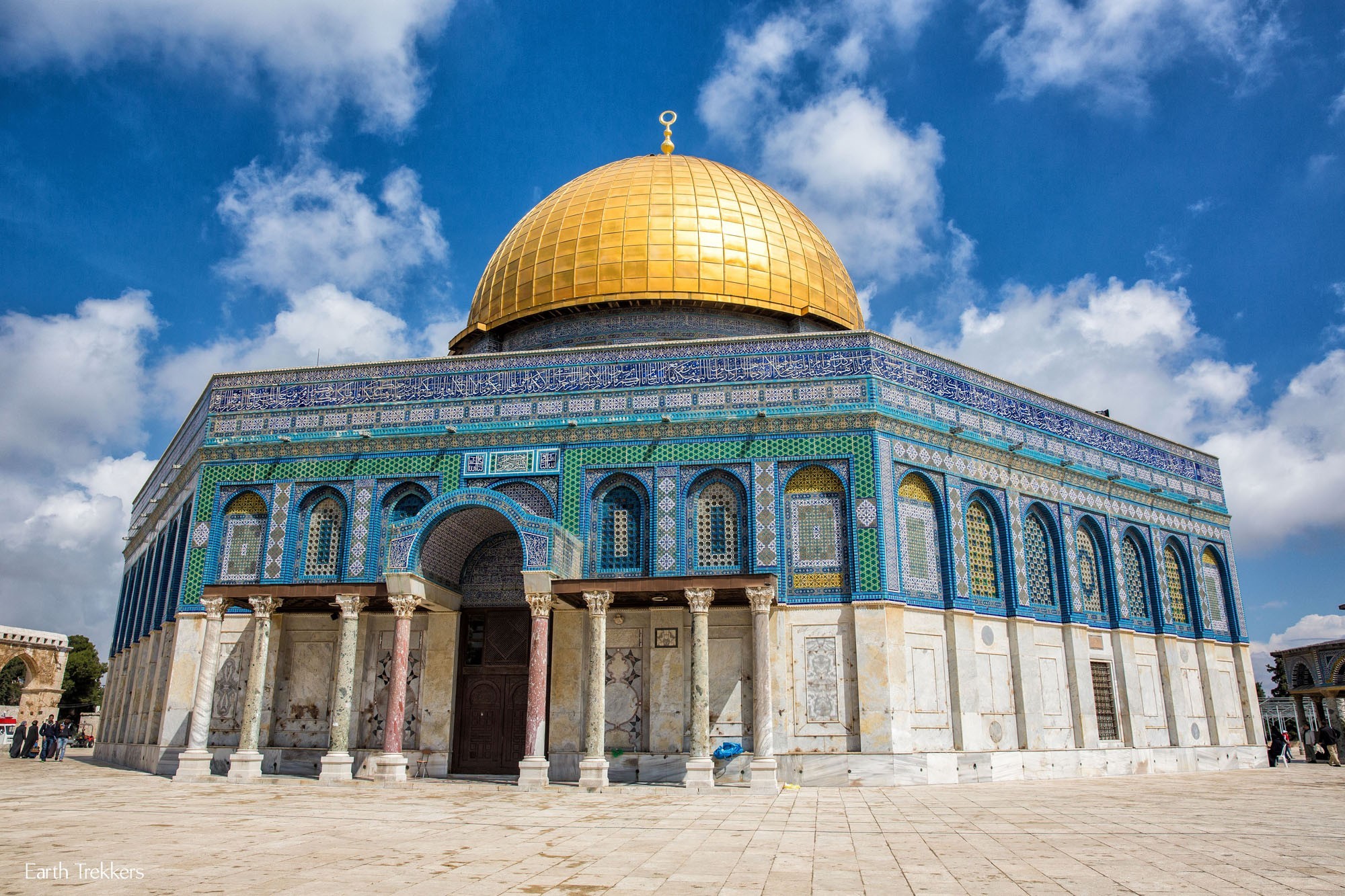
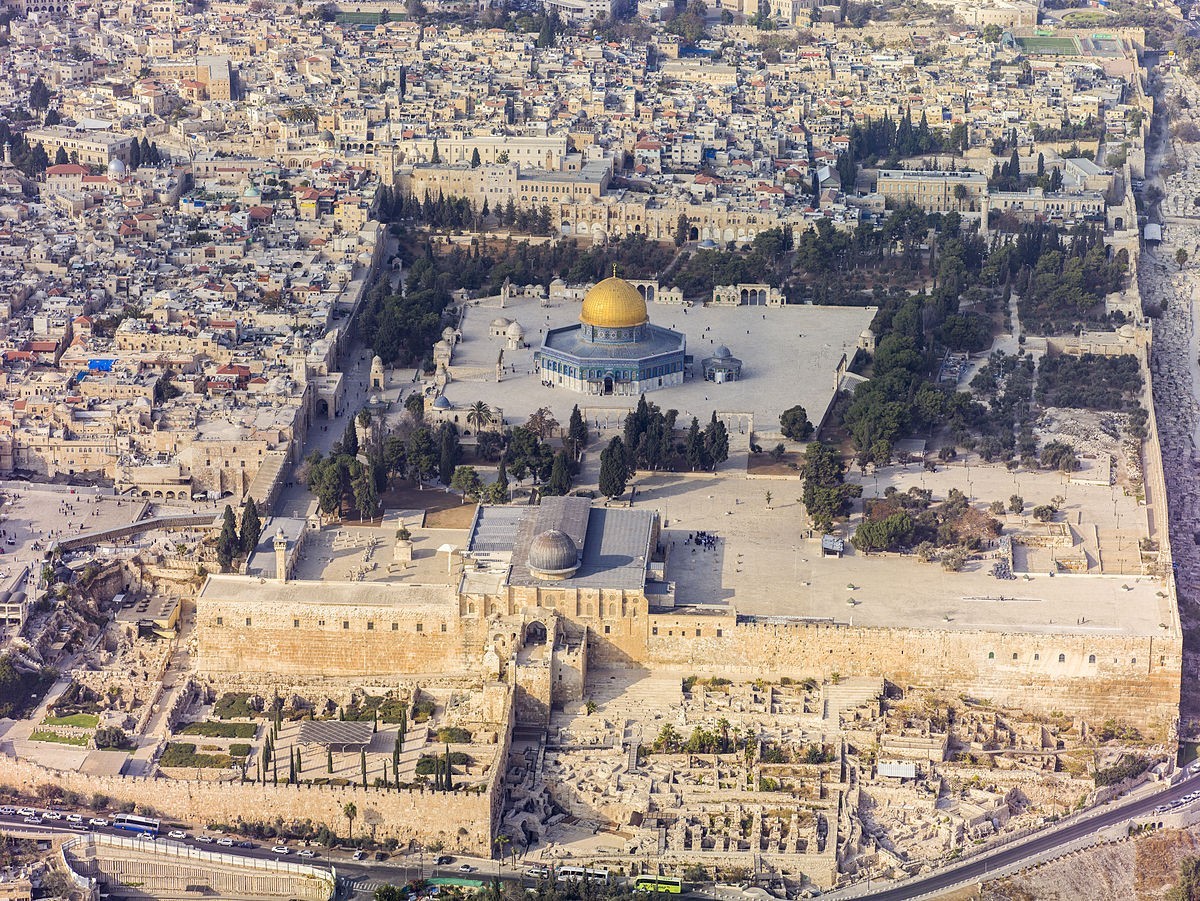
The Dome of the Rock (Qub­bat as-Sakhra)

The most uni­ver­sal­ly rec­og­nized sym­bol of Jerusalem is not a Jew­ish or Chris­t­ian holy place but a Mus­lim one : the Dome of the Rock, or Qub­bat as-Sakhra as it is known in Ara­bic. When peo­ple see its gold­en dome ris­ing above the open expanse of Haram as-Sha­reef, they think of only one place in the world. The Dome of the Rock is undoubt­ed­ly one of the most cel­e­brat­ed and most remark­able mon­u­ments of ear­ly Islam, vis­it­ed every year by thou­sands of pil­grims and tourists. It is Jerusalem’s answer to Paris’ Eif­fel Tow­er, Rome’s St. Peter’s Square, Lon­don’s Big Ben and Kuala Lumpur’s Petronas twin tow­ers ; daz­zling the minds of Mus­lims and non-Mus­lims alike. The Dome of the Rock is Jerusalem.

The Posi­tion of Jerusalem and Haram As-Sha­reef in Islam

Dur­ing the Mi’raj, the Prophet(P) is report­ed to have received from God the com­mand of five dai­ly prayers (salah) that all Mus­lims must per­form. Upon his return to Mec­ca, the Prophet insti­tut­ed these prayers. It is sig­nif­i­cant to note that he made Jerusalem the direc­tion (al-Qiblah) which Mus­lims must face while doing their prayers (nar­rat­ed by al-Bukhari, 41 and by Mus­lim, 525). Jerusalem is thus called Ula al-Qiblatain (the first qiblah). The Prophet (P) and the ear­ly com­mu­ni­ty of Islam wor­shipped towards the direc­tion of Jerusalem dur­ing their stay in Mec­ca. After the Hijra’ (migra­tion), Mus­lims in Med­i­na also con­tin­ued to pray fac­ing Jerusalem for almost sev­en­teen months until God com­mand­ed the Mus­lims to change their direc­tion of prayer from Jerusalem to Mec­ca (Qur’an 2:142 – 150). These estab­lished facts clear­ly sig­ni­fies the impor­tance of Jerusalem in Islam.

Lat­est articles

Did al-Zuṭṭ Ride Muham­mad ? A Crit­i­cal Philo­log­i­cal Reassess­ment of a Mod­ern Anti-Islam Polemic

This study dis­man­tles the al-zuṭṭ hadith polemic through close read­ing, lex­i­cog­ra­phy, and nar­ra­tive con­trol. By restor­ing con­text to yark­abūn, exam­in­ing trans­mis­sion vari­ants, and com­par­ing Semit­ic par­al­lels, it shows how innu­en­do trans­la­tion exploits pol­y­se­my, sup­press­es clo­sure, and man­u­fac­tures scan­dal with­out his­tor­i­cal war­rant with­in dis­ci­plined philol­o­gy and sober method­olog­i­cal lim­its alone here

State of Flux : Con­test­ed Doc­trines in Ear­ly Christianity

Ear­ly Chris­tian­i­ty lacked a sin­gle, uni­fied the­ol­o­gy. This arti­cle shows how lat­er ortho­doxy” emerged through his­tor­i­cal con­sol­i­da­tion rather than orig­i­nal consensus.

The Death of Muham­mad ﷺ : Poi­son, Prophet­hood, and the Mis­read­ing of Sources

The death of Muham­mad ﷺ exam­ined through Qur’anic lan­guage, hadith con­text, and his­to­ry, expos­ing how poi­son claims rely on mis­read­ing sources.