So is it possible for the Most Wise to enable a liar to be victorious, assist him, aid him against his opponents and make the end result in his favour and his followers, although this liar continuously invent lies and forgeries against God claiming that He sent him
There are those who say that lying and deceiving is at the soul of all crime and that Christianity epitomizes these traits more than any other faith. As proof of their assertion they often quote Paul of Tarsus, arguably the true founder of Christianity, who is recorded to have said, “But if through my falsehood God’s truthfulness abounds to his glory, why am I still being condemned as a sinner ? Any why not do evil that good may come ? – as some people slanderously charge us with saying. Their condemnation is just.” (Romans 3:7 – 8)
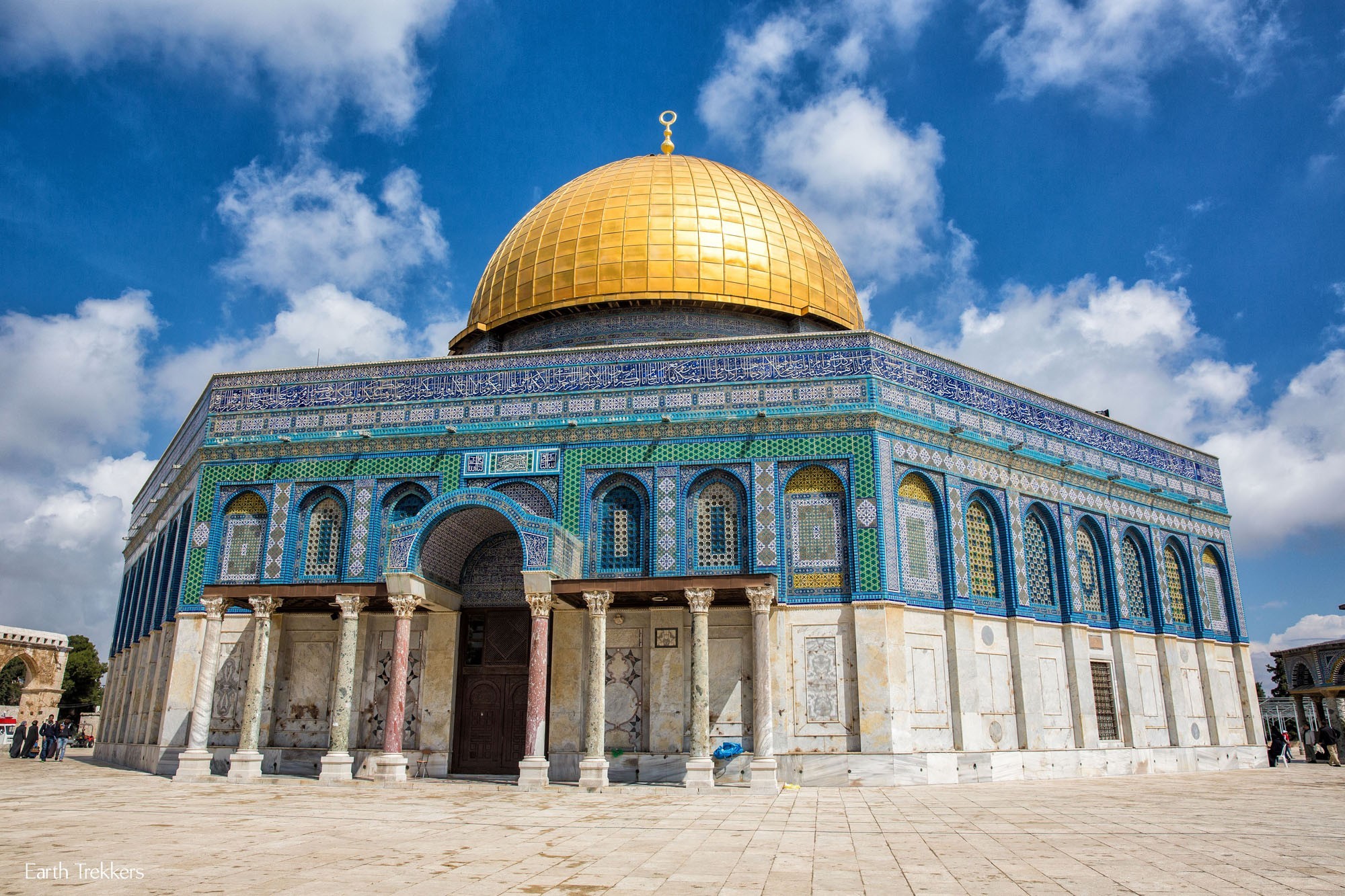
The most universally recognized symbol of Jerusalem is not a Jewish or Christian holy place but a Muslim one : the Dome of the Rock, or Qubbat as-Sakhra as it is known in Arabic. When people see its golden dome rising above the open expanse of Haram as-Shareef, they think of only one place in the world. The Dome of the Rock is undoubtedly one of the most celebrated and most remarkable monuments of early Islam, visited every year by thousands of pilgrims and tourists. It is Jerusalem’s answer to Paris’ Eiffel Tower, Rome’s St. Peter’s Square, London’s Big Ben and Kuala Lumpur’s Petronas twin towers ; dazzling the minds of Muslims and non-Muslims alike. The Dome of the Rock is Jerusalem.
We read the following teachings of the so-called “apostle” from Tarsus, Paul, written in his epistles as follows : If possible, so far as it depends…
The following is our partial response to the tirade authored by the belligerent Christian missionary Sam Shamoun, to be found here. This article will…
This study dismantles the al-zuṭṭ hadith polemic through close reading, lexicography, and narrative control. By restoring context to yarkabūn, examining transmission variants, and comparing Semitic parallels, it shows how innuendo translation exploits polysemy, suppresses closure, and manufactures scandal without historical warrant within disciplined philology and sober methodological limits alone here
Early Christianity lacked a single, unified theology. This article shows how later “orthodoxy” emerged through historical consolidation rather than original consensus.
The death of Muhammad ﷺ examined through Qur’anic language, hadith context, and history, exposing how poison claims rely on misreading sources.