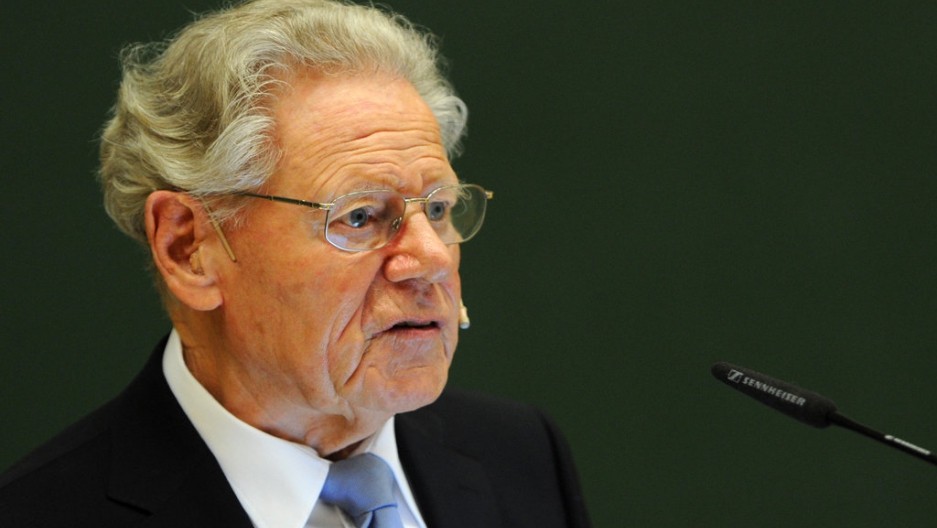
In Hans Kung’s address to this conference he has once again proven himself a pioneer of interreligious dialogue. What he has been doing throughout most of his theological career, he was doing again-exploring new territory, raising new questions in the encounter of Christianity with other religions. Although Kung made his greatest contribution in the inner-Christian, ecclesial arena, he has always realized-and increasingly so in more recent years-that Christian theology must be done in view of, and in dialogue with, other religions. As he has said, Christians must show an increasingly “greater broad-mindedness and openness” to other faiths and learn to “reread their own history of theological thought and faith” in view of other traditions. As a long-time reader of Kung’s writings, and as a participant with him in a Buddhist-Christian conference in Hawaii, January 1984, I have witnessed how much his own broad-mindedness and openness to other religions has grown. He has been changed in the dialogue.
Answering Islam has posted an early reaction in objection to our publishing of Han Kung on the Prophet Muhammad (P). There are several issues in this reaction by Jochen Katz, the de factodictator of Answering Islam, that needs to be corrected. We shall briefly respond to each of the allegations.
The following is an excerpt taken from “Christianity and World Religions : Dialogue with Islam”, in Leonard Swidler (ed.), Muslims in Dialogue : The Evolution of A Dialogue, vol. 3 (The Edwin Mellen Press, 1992) by the Christian philosopher Hans Kung who conveys a Christian opinion on Prophet Muhammad (P). We do not neccessarily agree with everything that has been said here.
This study dismantles the al-zuṭṭ hadith polemic through close reading, lexicography, and narrative control. By restoring context to yarkabūn, examining transmission variants, and comparing Semitic parallels, it shows how innuendo translation exploits polysemy, suppresses closure, and manufactures scandal without historical warrant within disciplined philology and sober methodological limits alone here
Early Christianity lacked a single, unified theology. This article shows how later “orthodoxy” emerged through historical consolidation rather than original consensus.
The death of Muhammad ﷺ examined through Qur’anic language, hadith context, and history, exposing how poison claims rely on misreading sources.