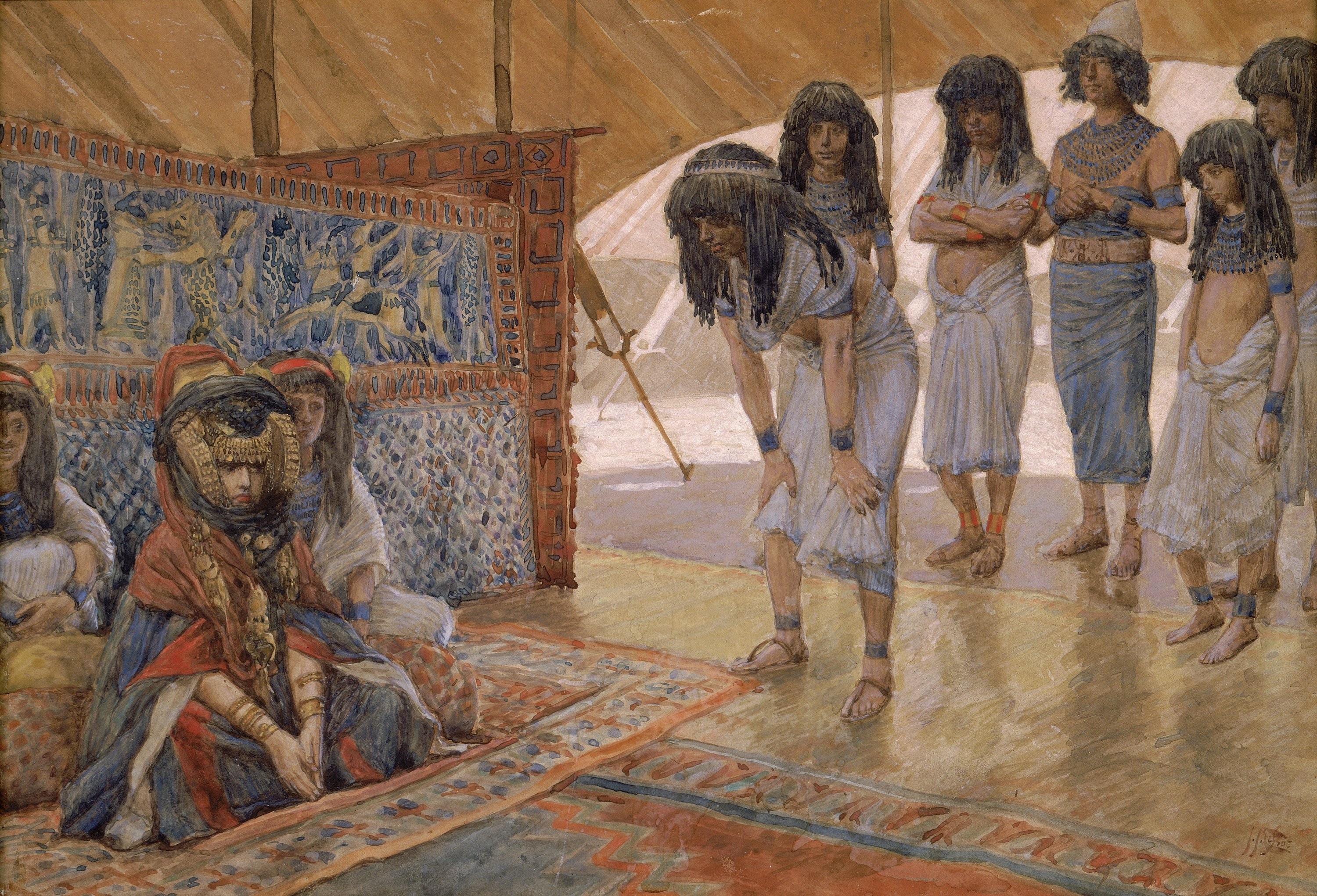
Was Sarah really Abraham’s sister ? Ibn Hazm questions the status of Sarah as being Abraham’s sister, as accepting that viz., from the Biblical perspective would result in various disagreements with other passages in the Old Testament concerning moral and theological issues. This is in reference to the stories of Sarah’s seizure by Pharaoh and Abime’elech which was narrated in Genesis 12:10 – 18 and Genesis 20, Genesis 17:17 and Genesis 20:1 – 18. We cite the related passages on the story of the seizure of Sarah as follows.
While Christians would prefer to allude to the notion that Paul, the self-acclaimed “apostle” of Jesus, was “inspired” when he wrote his epistles, the evidences we have researched states otherwise. We have seen how Paul had cited a verse from the “apocryphal books of Elijah” but claimed that he was citing from the book of Isaiah. Apparantly this citing of quotations from apocryphal or Rabbinic writings was not alien to Paul, for in the epistles of Paul, there are abundant signs that he was extremely familiar with Rabbanic material and constantly refers to them. This is not surprising since Paul himself had admitted to familiarity with Jewish traditions under the tutelage of Gamaliel (Acts 22:3).
This study dismantles the al-zuṭṭ hadith polemic through close reading, lexicography, and narrative control. By restoring context to yarkabūn, examining transmission variants, and comparing Semitic parallels, it shows how innuendo translation exploits polysemy, suppresses closure, and manufactures scandal without historical warrant within disciplined philology and sober methodological limits alone here
Early Christianity lacked a single, unified theology. This article shows how later “orthodoxy” emerged through historical consolidation rather than original consensus.
The death of Muhammad ﷺ examined through Qur’anic language, hadith context, and history, exposing how poison claims rely on misreading sources.