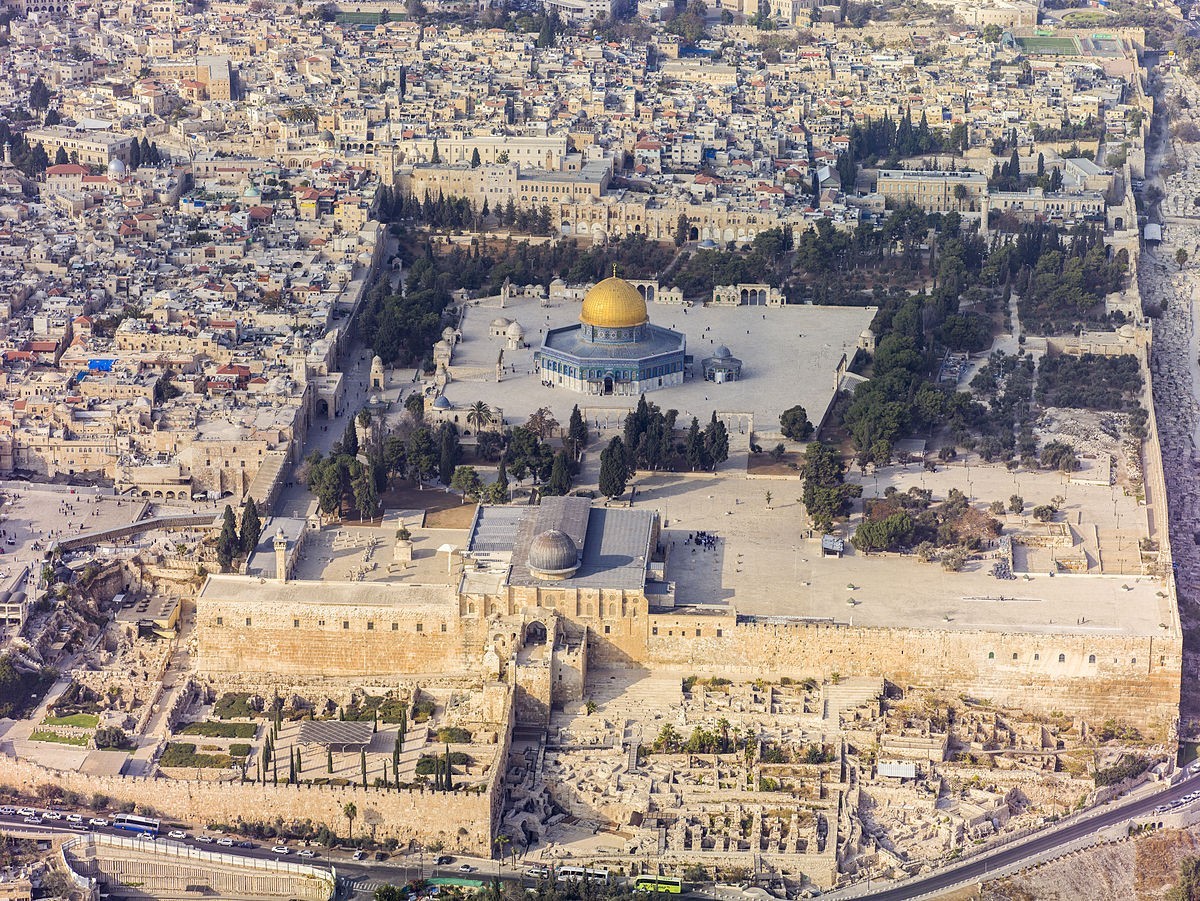
During the Mi’raj, the Prophet(P) is reported to have received from God the command of five daily prayers (salah) that all Muslims must perform. Upon his return to Mecca, the Prophet instituted these prayers. It is significant to note that he made Jerusalem the direction (al-Qiblah) which Muslims must face while doing their prayers (narrated by al-Bukhari, 41 and by Muslim, 525). Jerusalem is thus called Ula al-Qiblatain (the first qiblah). The Prophet (P) and the early community of Islam worshipped towards the direction of Jerusalem during their stay in Mecca. After the Hijra’ (migration), Muslims in Medina also continued to pray facing Jerusalem for almost seventeen months until God commanded the Muslims to change their direction of prayer from Jerusalem to Mecca (Qur’an 2:142 – 150). These established facts clearly signifies the importance of Jerusalem in Islam.
The recent barrage of missionary dementia gives us a marvelous opportunity to expose the character of the missionary Sam Shamoun, his mental disorder and the extremes he is willing to undertake in order to unleash his abuses and prejudice towards Muslims. Indeed, he convincingly demonstrates that he is a confirmed Islamophobe. The discussion is concerning the use of the term “missionary”. The missionary claims that we should not refer to him as a missionary because even though he is a missionary, many Muslims nevertheless have alleged “negative” views concerning the title “missionary” according to his opinion. Hence he argues that we are making an ad hominem attack against him every time we rightfully call him a missionary. He claims that his arguments will be allegedly dismissed beforehand by Muslims when they find out that he is a missionary.
Some critics of Islam have reviled the Prophet(P) as a self-indulgent libertine. They have accused him of character failings that are hardly compatible with…
This study dismantles the al-zuṭṭ hadith polemic through close reading, lexicography, and narrative control. By restoring context to yarkabūn, examining transmission variants, and comparing Semitic parallels, it shows how innuendo translation exploits polysemy, suppresses closure, and manufactures scandal without historical warrant within disciplined philology and sober methodological limits alone here
Early Christianity lacked a single, unified theology. This article shows how later “orthodoxy” emerged through historical consolidation rather than original consensus.
The death of Muhammad ﷺ examined through Qur’anic language, hadith context, and history, exposing how poison claims rely on misreading sources.